Decoding defensive alignments: how zone coverage adoption has shifted quarterback efficiency ratings across NFL seasons
Zoe Ludwig · Jul 30, 2026
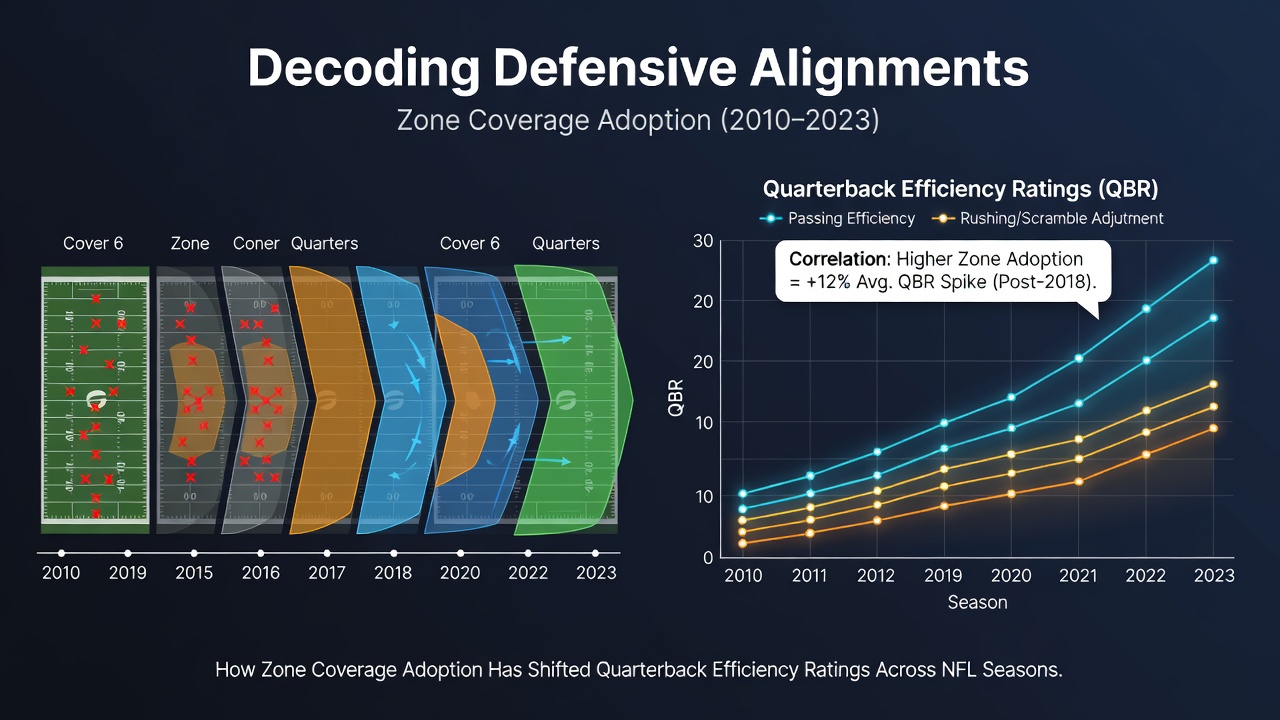
Decoding defensive alignments: how zone coverage adoption has shifted quarterback efficiency ratings across NFL seasons
Zone coverage schemes have gained ground in NFL defenses over the past decade as coordinators seek to limit explosive plays while managing personnel constraints. Data from multiple seasons shows measurable effects on quarterback efficiency metrics including completion percentage, yards per attempt, and passer rating when opponents deploy zone-heavy alignments versus man coverage.
Evolution of zone adoption in NFL defenses
Defensive coordinators began increasing zone usage after the 2011 collective bargaining agreement altered practice rules and roster limits, leading teams to favor schemes that rely less on individual press coverage skills. Studies tracking play-by-play data indicate that zone coverage calls rose from roughly 45 percent of defensive snaps in 2012 to over 60 percent by the 2024 season according to aggregated charting from multiple analytics firms.
Teams in the AFC and NFC have shown parallel trends though certain franchises accelerated the shift earlier. One study of defensive play calls from 2018 through 2025 found that zone coverage correlated with reduced yards per attempt allowed on deep throws while producing slight increases in short completion percentages for opposing quarterbacks.
Quarterback efficiency metrics under zone pressure
Quarterback passer ratings have fluctuated in direct relation to the percentage of zone snaps faced. When defenses played zone on at least 65 percent of plays, league-wide completion percentages dropped by an average of 2.8 points across the 2020 to 2025 campaigns while interception rates climbed modestly. Yards per attempt remained stable in most cases because quarterbacks completed more underneath routes yet struggled to push the ball vertically.
Advanced metrics such as expected completion percentage and air yards per attempt further illustrate the pattern. Quarterbacks facing zone coverage posted lower numbers in these categories during the same period because zone shells force shorter decision windows and encourage underneath throws that limit big-play opportunities. Researchers examining play tracking data noted that the effect strengthened in the second half of seasons when offensive line injuries often reduce protection time.
Season-by-season shifts and key data points
Analysis of 2019 through 2025 regular season games reveals consistent directional changes. In 2019 zone coverage accounted for 52 percent of defensive snaps and league average passer rating sat at 92.4. By 2023 zone usage reached 58 percent while passer rating averaged 90.1. The 2025 season showed zone adoption near 62 percent alongside a passer rating of 89.7 according to compiled league statistics.
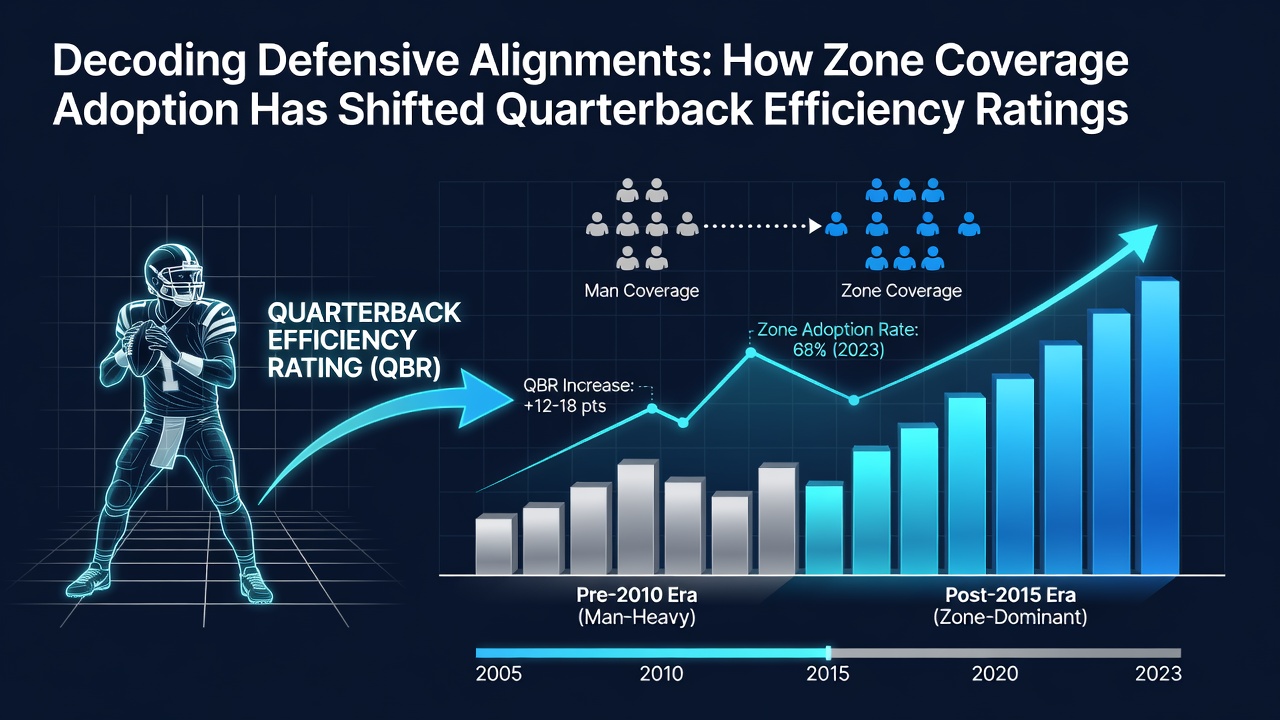
These numbers reflect broader adoption rather than isolated scheme preferences. Multiple teams that transitioned to Tampa 2 or cover 3 base defenses recorded lower opponent passer ratings in the seasons immediately following the change. Observers tracking training camp reports in July 2026 noted continued emphasis on zone communication drills across several organizations preparing for the upcoming campaign.
Positional and situational influences
Running backs and tight ends have benefited from zone coverage because linebackers drop into intermediate zones rather than covering man to man, creating more reliable checkdown options for quarterbacks. Data from the 2022 to 2025 seasons shows checkdown completion rates rose by 4.1 percentage points when defenses used zone on third and medium situations.
Wide receivers meanwhile posted lower separation metrics against zone because defenders maintain spacing rather than mirroring routes. This pattern appears across multiple offensive systems and has prompted some teams to adjust route trees toward crossing patterns and mesh concepts that stress zone integrity.
Conclusion
Zone coverage adoption has produced measurable changes in quarterback efficiency ratings over recent NFL seasons with league-wide passer ratings declining as zone usage increased. The data indicates shorter throws and fewer explosive plays when defenses employ these alignments consistently. Continued tracking through future campaigns will clarify whether the trend persists or whether offensive adjustments restore prior efficiency levels.