Decoding the Role of Mental Conditioning Programs and Consistency Metrics in High-Pressure Situations for Golfers and Archers
Nils Bennett · Jul 11, 2026
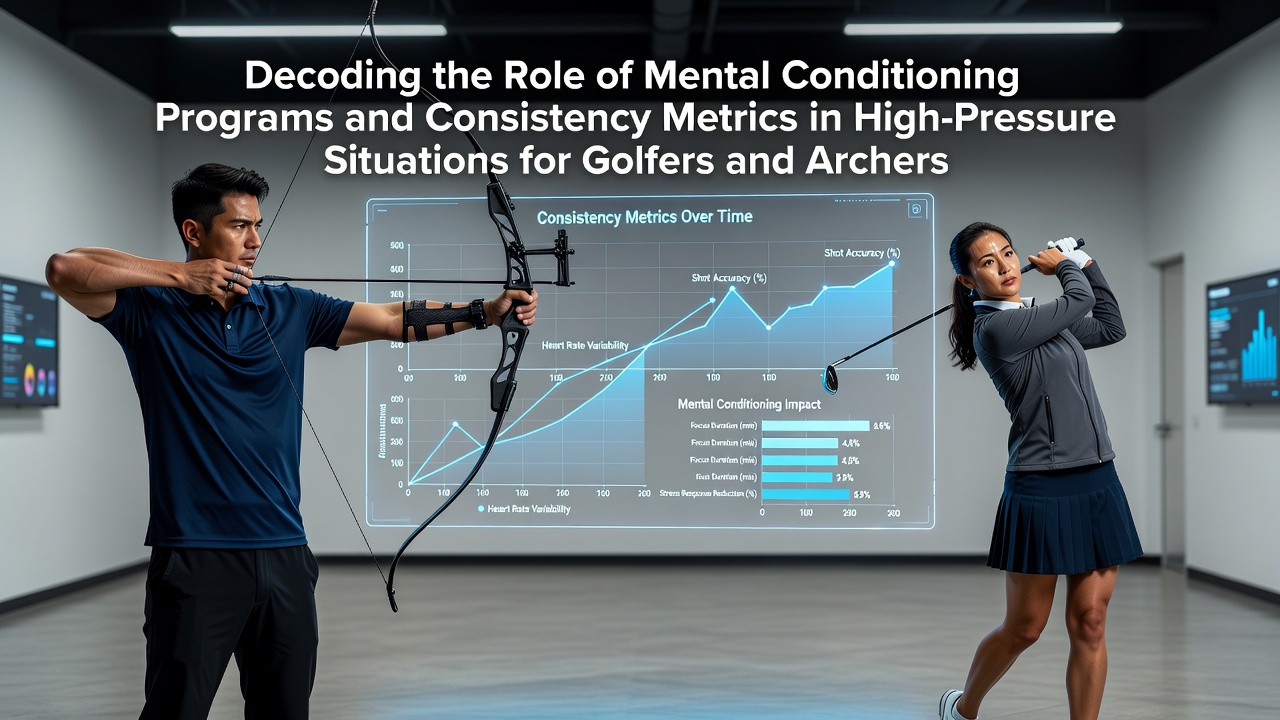
Decoding the Role of Mental Conditioning Programs and Consistency Metrics in High-Pressure Situations for Golfers and Archers
Precision sports like golf and archery place unique demands on athletes who must maintain control during moments when outcomes hinge on single shots or arrows, and mental conditioning programs have emerged as structured approaches that incorporate visualization exercises, breathing protocols, and cognitive reframing techniques drawn from sports psychology research conducted across multiple continents.
These programs train participants to simulate high-stakes scenarios in controlled settings so that physiological responses such as elevated heart rates or muscle tension become familiar rather than disruptive, while consistency metrics track variables including shot dispersion patterns, release timing variability, and pre-performance routine adherence through wearable sensors and video analysis systems.
Mental Conditioning Frameworks in Golf
Golfers often participate in programs that emphasize pre-shot routines lasting between 10 and 20 seconds, during which they rehearse target visualization and trigger words to anchor attention, and data collected from PGA Tour events between 2020 and 2025 show reduced three-putt frequency among players who completed at least six months of such training compared with control groups. Researchers at the Australian Institute of Sport documented how golfers using biofeedback devices achieved steadier grip pressure readings during final rounds of major championships, where external factors like crowd noise and leaderboard pressure intensify.
Programs frequently integrate progressive muscle relaxation sequences performed between holes, allowing athletes to reset neuromuscular patterns after errant shots, and longitudinal studies indicate that participants maintain lower cortisol levels measured via saliva samples when facing sudden-death playoffs or closing nine scenarios.
Application to Archery Performance
Archers engage in parallel conditioning methods that focus on anchoring points and follow-through consistency, with national teams from Canada and South Korea incorporating mindfulness-based stress reduction modules that last eight weeks and target sustained attention spans during elimination rounds at events such as the World Archery Championships. Consistency metrics here include arrow grouping diameters at 70-meter distances alongside draw-length standard deviation captured by motion-capture technology, revealing that athletes who log daily mental rehearsal sessions reduce group size by measurable margins under fatigue conditions induced by multi-day competitions.
High-pressure simulations replicate Olympic final formats where archers shoot one arrow at a time with scores visible to all competitors, and training logs demonstrate improved hit rates on 10-ring targets when participants apply cognitive defusion strategies to separate self-critical thoughts from immediate task execution.
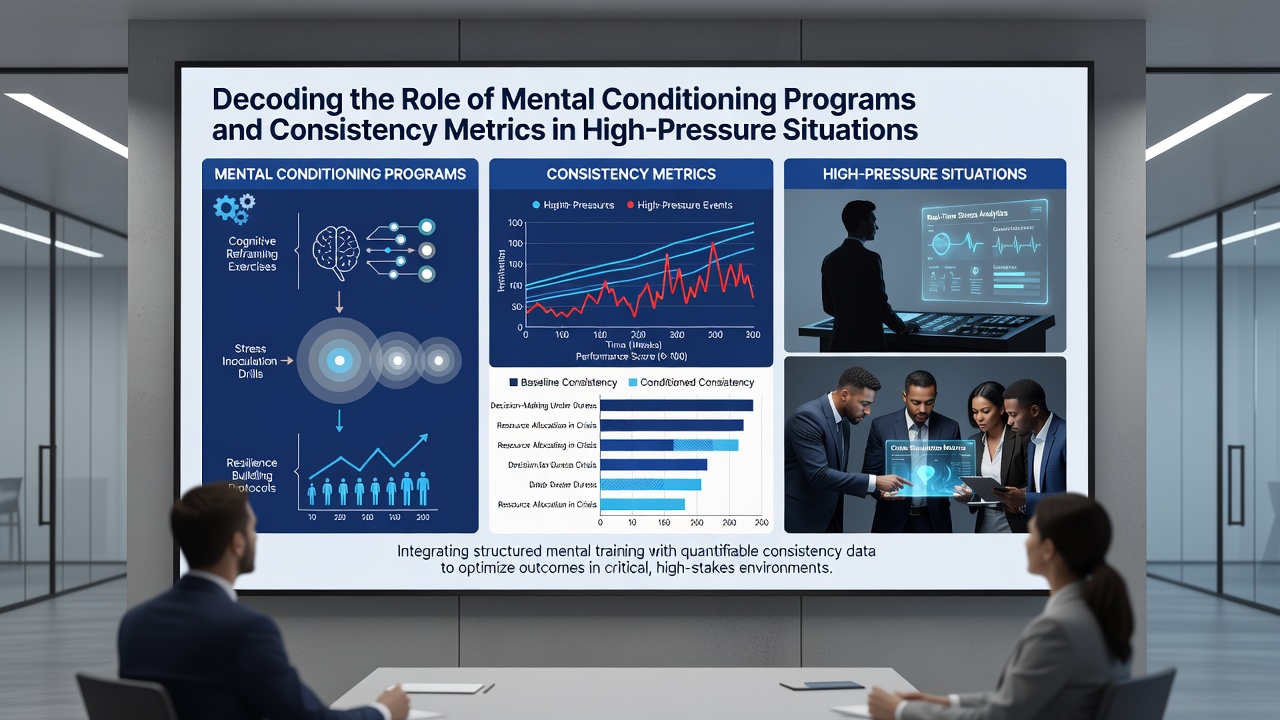
July 2026 brings continued integration of these methods as several federations prepare for upcoming continental qualifiers, where real-time dashboards display aggregated consistency scores to coaches on the range without interrupting athlete focus.
Measuring Consistency Under Stress
Consistency metrics function through layered data collection that combines kinematic analysis from high-speed cameras, heart-rate variability indices from chest-strap monitors, and subjective load ratings completed immediately after each shot or arrow, producing composite scores that predict performance stability across repeated pressure exposures. Studies published by the University of Queensland's Centre for Sports Science have correlated lower variability in quiet-eye duration, the period of final visual fixation before release or impact, with higher success percentages in both golf putting and archery shooting tasks performed in laboratory pressure chambers.
Programs adjust training loads when metrics indicate rising inconsistency thresholds, such as increased lateral dispersion exceeding two standard deviations from baseline, prompting inclusion of additional breathing cadence drills or scenario-based exposure sessions that escalate audience simulation and scoring consequences progressively.
Integration of Technology and Training Protocols
Wearable systems now feed data directly into periodized plans that balance physical volume with mental recovery blocks, and federations in the European Union have standardized reporting templates that allow cross-sport comparisons between golf and archery squads preparing for multi-discipline training camps. Those who review aggregated datasets note that athletes maintaining routine adherence above 85 percent across practice and competition blocks exhibit fewer performance drops when transitioning from qualifying stages to medal matches.
Case examples include national archers who reduced release timing variance from 45 milliseconds to under 20 milliseconds after incorporating neurofeedback sessions twice weekly, while golfers tracked via similar platforms showed parallel gains in club-face angle repeatability during approach shots on closing holes of stroke-play events.
Conclusion
Mental conditioning programs paired with granular consistency metrics provide measurable frameworks that support performance stability for golfers and archers facing decisive moments, and ongoing data collection through 2026 continues to refine how these tools align with individual physiological profiles and event-specific demands across international circuits.