Exploring Positional Value Shifts in NFL Draft Selections: How Advanced Metrics Have Reshaped Scouting Priorities Since the Salary Cap Era Began
Uma Foster · May 16, 2026
Exploring Positional Value Shifts in NFL Draft Selections: How Advanced Metrics Have Reshaped Scouting Priorities Since the Salary Cap Era Began
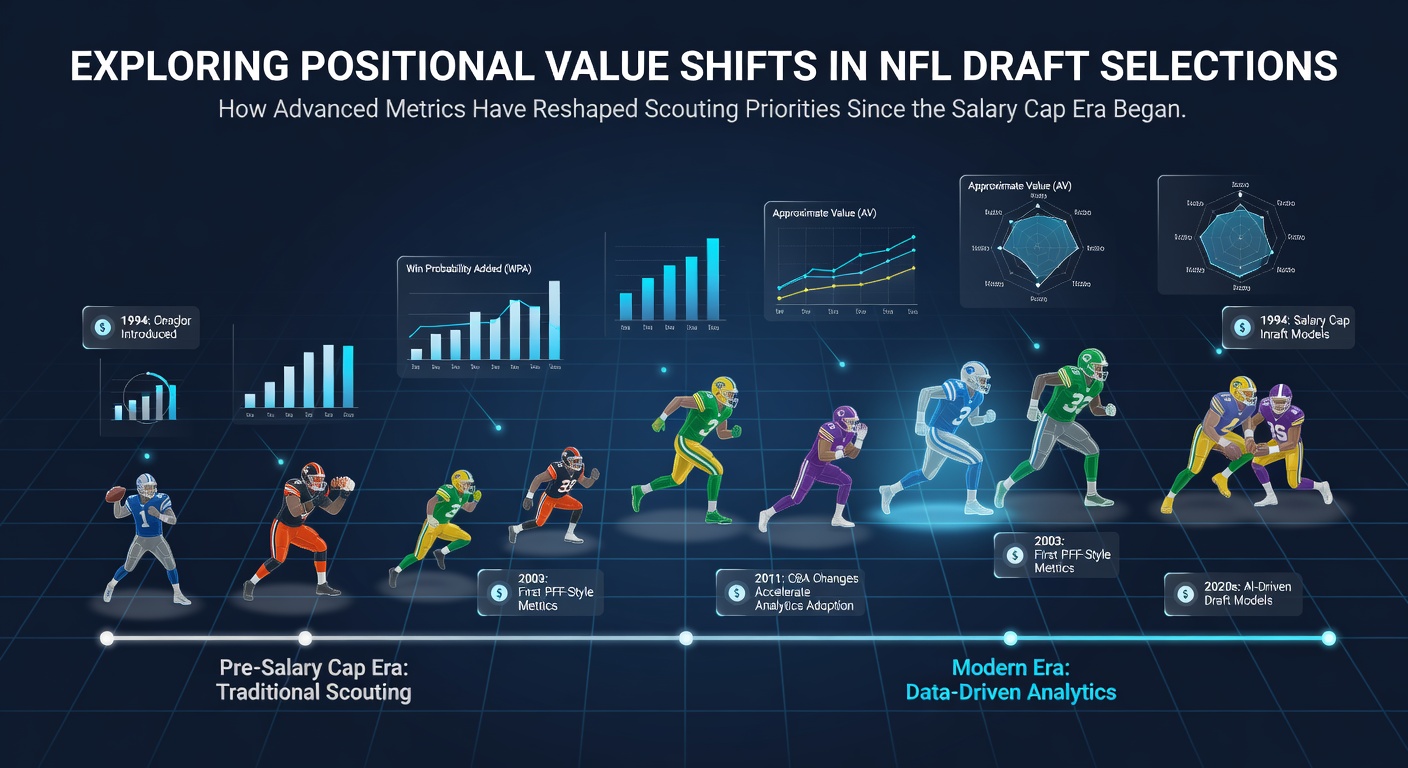
The introduction of the salary cap in 1994 forced NFL teams to rethink how they allocated resources across positions, and advanced metrics have since provided the data to guide those decisions with greater precision. Teams now evaluate players not only on traditional scouting traits but also on metrics such as expected points added, playmaking efficiency, and long-term contract value projections. These tools emerged gradually through the 2000s as front offices adopted statistical models that quantified contributions at every position. Early cap-era drafts still leaned heavily on subjective evaluations of size, speed, and college production, yet patterns began to shift once teams tracked how specific positions affected team wins over multiple seasons. Quarterbacks and offensive tackles consistently commanded the highest cap percentages, while interior defensive linemen and backup running backs saw their relative values decline in draft capital allocation. Data from multiple seasons after 1994 revealed that teams spending heavily on premium positions at the top of drafts maintained better roster flexibility in later rounds.Early Cap Constraints and Draft Adjustments
Salary cap rules limited total spending and created direct trade-offs between positions, so organizations started compiling internal databases that compared historical contract outcomes with on-field results. Researchers tracking first-round selections from 1994 through 2005 found that teams drafting edge rushers and cornerbacks earlier achieved stronger defensive efficiency ratings in subsequent years compared with those prioritizing skill positions. This evidence encouraged a gradual move away from running back selections in the top 10, since replacement-level production at that spot proved easier to find at lower cost.
Advanced tracking systems introduced in the mid-2000s supplied granular data on player movements and play outcomes, allowing analysts to isolate positional impact more accurately. Metrics such as pass-rush win rate and coverage grade began influencing how teams valued defensive linemen versus linebackers. Front offices that incorporated these figures into draft models reduced the frequency of high selections at linebacker, reallocating those picks toward offensive line and secondary depth.Integration of Modern Analytics Platforms
By the 2010s, third-party analytics providers supplied standardized grades that teams cross-referenced with their own film study, and this combination altered how scouts prioritized traits like route-running precision and block sustainment. One notable development occurred when models demonstrated that interior offensive linemen generated comparable win probabilities to many edge players once adjusted for snap counts and injury risk. Draft boards accordingly reflected higher selections for guards and centers in the middle rounds while edge talent still dominated early picks.
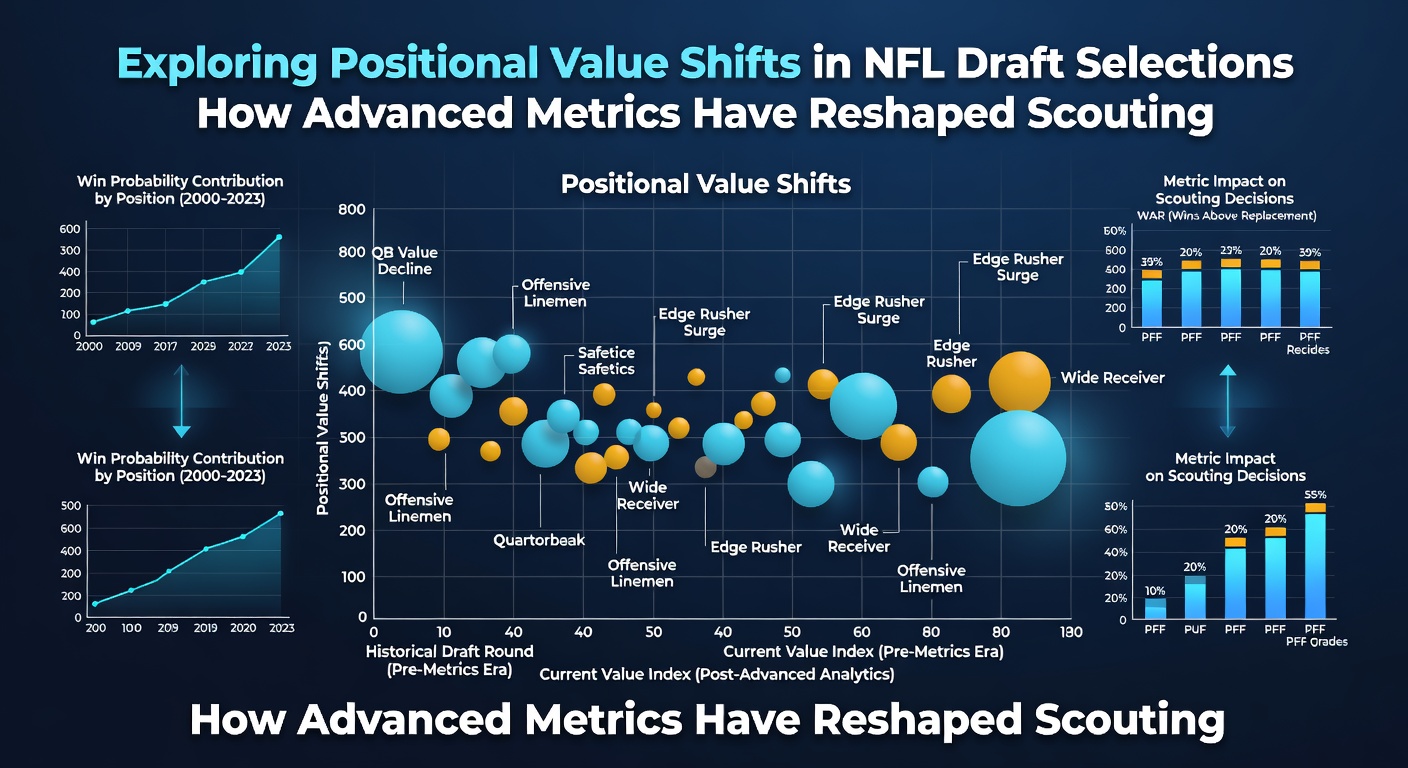 Quarterback evaluation underwent perhaps the most visible transformation as metrics like completion percentage over expected and adjusted net yards per attempt entered scouting reports. Teams drafting signal-callers outside the top five after 2015 increasingly relied on these numbers to identify developmental prospects who carried lower bust rates than raw athletic testers alone would suggest. Wide receiver selections also stabilized around specific archetypes, with analytics favoring players who posted strong yards-per-route-run figures in college over those with purely size-based profiles.
Current Trends Leading Into 2026
As the league prepared for the 2026 offseason, several clubs adjusted their draft strategies based on updated cap projections that showed continued inflation at the quarterback and left tackle positions. Data compiled through the 2025 season indicated that teams investing first-round capital in versatile defensive backs achieved better coverage grades across multiple coverages than those focusing exclusively on man-coverage specialists. This finding prompted a modest increase in selections of nickel and dime defenders in rounds two and three.
Running back and tight end values remained suppressed in early rounds because replacement production at those spots stayed readily available through free agency and later picks. Organizations that followed these trends maintained lower average ages at skill positions while preserving cap space for premium contracts at quarterback, offensive tackle, and edge rusher.