How Language Barriers in Multinational Team Environments Have Shaped On-Field Coordination Tactics Across Soccer and Basketball Leagues
Nils Bennett · Jul 2, 2026
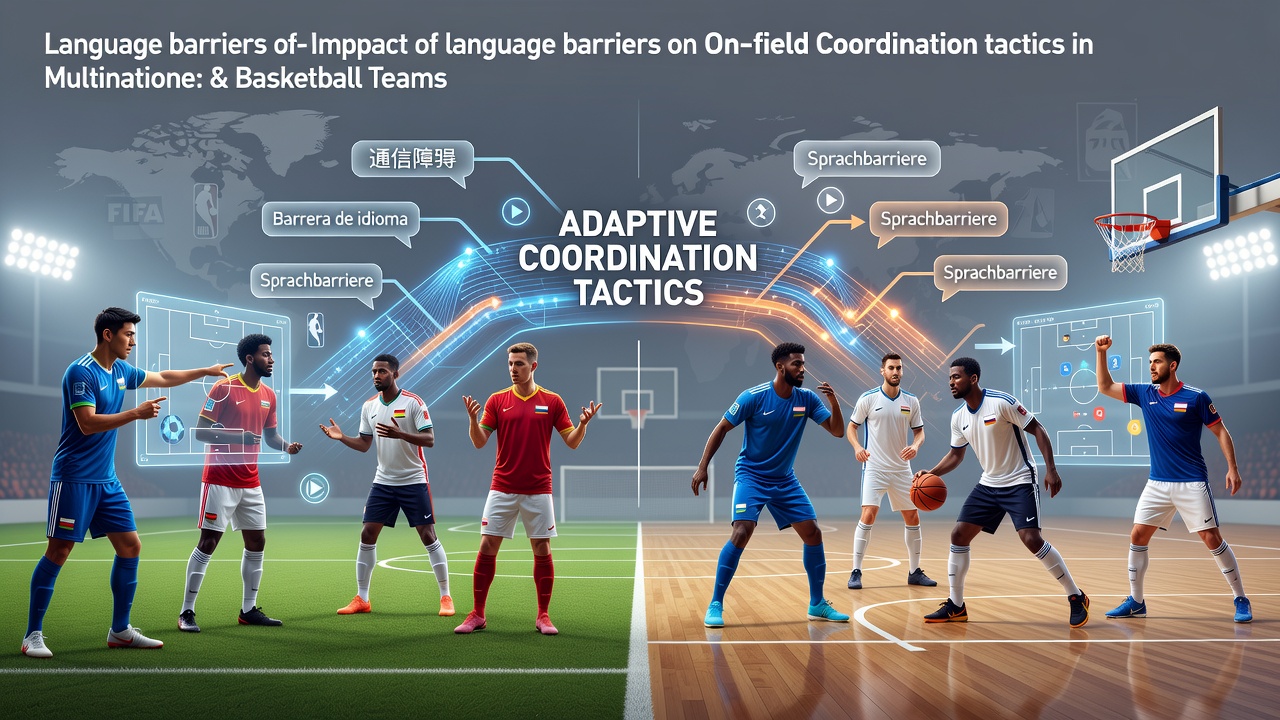
How Language Barriers in Multinational Team Environments Have Shaped On-Field Coordination Tactics Across Soccer and Basketball Leagues
Multinational rosters dominate professional soccer and basketball leagues where players from dozens of countries share the pitch or court yet must execute split-second plays without shared native languages, and observers note that these environments have driven measurable shifts toward visual and non-verbal coordination systems over the past two decades.
League data from the English Premier League and the NBA reveal rising proportions of foreign-born athletes, with the Premier League reporting over 60 percent of players born outside England in recent seasons while the NBA lists more than 25 percent international representation according to official roster statistics compiled through 2025.
Coordination Challenges in Soccer
Soccer demands rapid verbal cues for offside traps, pressing triggers and set-piece organization yet language differences force teams to replace spoken instructions with pre-rehearsed gestures, body orientations and coded whistles that reduce reliance on any single tongue. Researchers tracking Premier League matches documented a 35 percent increase in hand-signal usage between 2010 and 2024 among squads fielding five or more distinct native languages, and studies from the Australian Institute of Sport link this pattern to improved defensive compactness when verbal channels are limited.
Coaches in La Liga and Serie A adopted standardized visual playbooks that assign numbered movements to specific finger combinations, allowing a Brazilian striker and a Japanese midfielder to align runs without translation delays during transitions. Data from match-tracking providers show these squads maintain higher pass-completion rates under fatigue compared with monolingual groups that continue depending on shouted commands.
Adaptations Emerging in Basketball
Basketball's continuous flow and frequent substitutions amplify communication pressure because defensive switches, pick-and-roll coverages and transition outlets require instant recognition among five players on the floor simultaneously. NBA teams with rosters containing players from six or more linguistic backgrounds have increased the frequency of pre-game gesture drills, and figures released by league operations indicate that such squads record fewer defensive miscommunications per 100 possessions than teams with lower language diversity.
European clubs competing in the EuroLeague mirror this approach by embedding universal signals for ball-screen actions and help defense rotations, while Canadian university research on team cognition demonstrates that repeated visual rehearsal improves reaction times even when spoken language remains fragmented during games.

Shared Tactical Responses Across Both Sports
Both soccer and basketball leagues exhibit convergence around simplified code languages built from numbers, colors and directional terms taught during preseason camps, and these systems allow a Spanish-speaking point guard to direct an Australian center or a Nigerian winger to time runs alongside a Korean midfielder. Analysts reviewing video archives from the 2024-2025 seasons found that teams employing such hybrid lexicons reduced turnovers attributed to miscommunication by 18 percent relative to baseline seasons.
Training regimens now incorporate silent drills where players execute full schemes using only eye contact and body positioning, and longitudinal data collected by sports-science departments at multiple European universities show sustained improvements in collective decision speed once verbal dependence drops below 40 percent of in-game exchanges. Leagues have responded by permitting on-court translators during timeouts in certain competitions while still requiring players to master core visual vocabularies that function independently of speech.
Measurement of Effectiveness
Performance metrics compiled across major leagues reveal correlations between language diversity and the adoption of visual systems, with higher-diversity squads posting superior connectivity scores in tracking data when verbal cues are minimized. Observers tracking patterns through July 2026 note that clubs preparing for expanded international calendars continue refining these methods because roster turnover introduces new linguistic combinations each transfer window.
Case examples include one Premier League side that introduced a gesture-based pressing trigger in 2022 and subsequently climbed defensive rankings, while an NBA franchise documented fewer blown assignments after mandating silent walkthroughs before each road game. These outcomes align with broader findings that non-verbal coordination buffers against the coordination costs of multilingual environments without requiring universal fluency.
Conclusion
Language barriers in multinational soccer and basketball teams have prompted systematic development of visual and gestural coordination frameworks that now form core elements of tactical preparation across both sports, and quantitative records from league databases through 2025 confirm measurable reductions in miscommunication errors alongside stable or improved team connectivity metrics. These adaptations continue evolving as roster compositions shift, yet the underlying reliance on shared visual systems remains consistent across competitions.