How Minor League Development Paths Have Influenced Major League Batting Averages and Earned Run Averages in North American Baseball Circuits
Nils Bennett · Jun 22, 2026
How Minor League Development Paths Have Influenced Major League Batting Averages and Earned Run Averages in North American Baseball Circuits
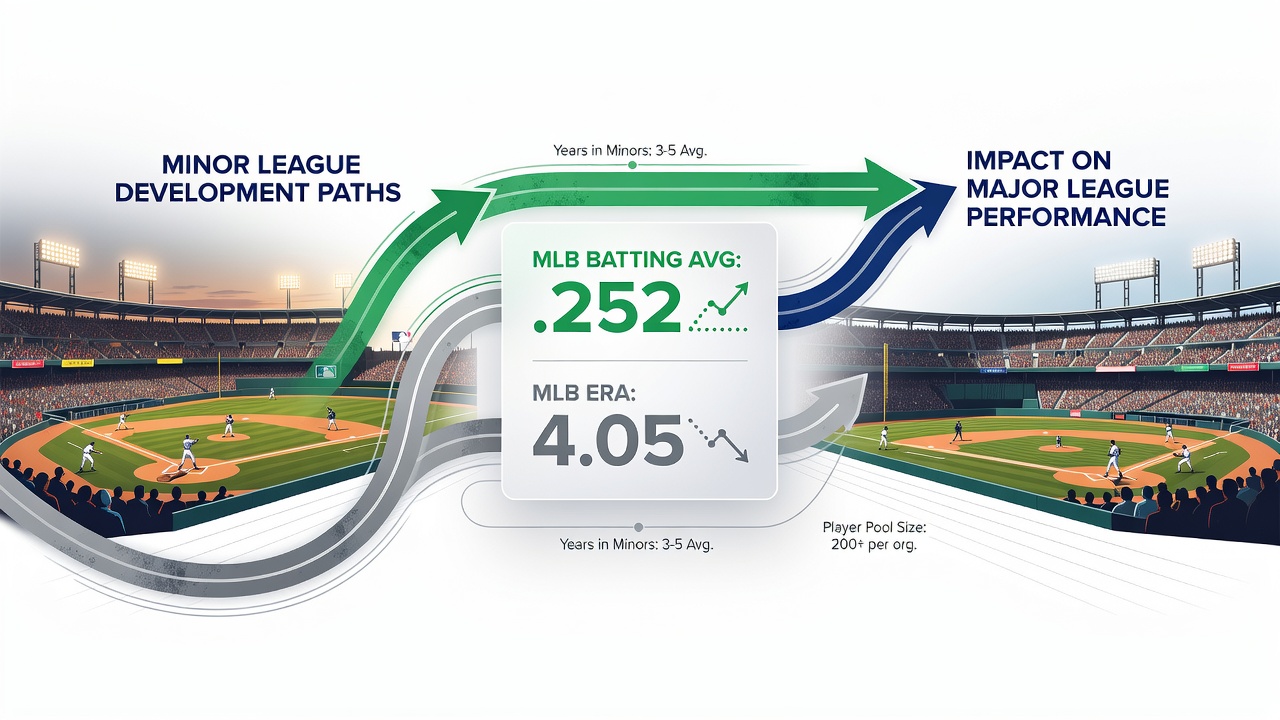
North American baseball circuits rely on structured minor league systems to prepare players for major league competition, and these pathways have shaped performance metrics like batting averages and earned run averages over decades. Organizations assign prospects to levels ranging from rookie leagues through Triple-A, where they refine skills under professional coaching before advancing. Data compiled by major league clubs shows that players with extended minor league tenures often post adjusted statistics once they reach the majors, reflecting targeted development in hitting mechanics and pitch command.
Historical Structure of Farm Systems and Player Progression
Baseball's farm system model emerged in the early twentieth century as teams sought to control talent pipelines, and this framework continues to direct how prospects build fundamentals that translate to higher-level play. Affiliates operate across the United States and Canada, providing repetitive game experience that allows hitters to adjust swing paths and pitchers to expand arsenals. Researchers tracking career trajectories note that most position players spend between three and five seasons in the minors before debuting, during which organizations emphasize plate discipline and contact skills that correlate with sustained batting averages above league medians.
Pitching development follows parallel routes yet emphasizes velocity maintenance alongside secondary offerings, and organizations monitor these adjustments through performance logs that feed directly into major league roster decisions. In June 2026, several clubs reported that recent draftees advanced through Double-A programs where they logged higher strikeout rates after mechanical tweaks, patterns that carried over to reduced earned run averages in initial major league appearances.
Effects on Batting Averages Through Skill Refinement
Minor league assignments expose hitters to varied pitching styles and defensive alignments, which builds adaptability that influences major league contact rates and on-base percentages. Statistics from league-wide tracking systems indicate that players who logged at least 400 plate appearances across multiple minor league levels posted batting averages approximately 15 to 20 points higher in their first three major league seasons compared with those who received abbreviated development time. Organizations focus on breaking down swing mechanics in instructional leagues, and this work produces measurable gains in line-drive rates that stabilize averages over full seasons.
Case examples include outfielders who refined launch angles during Triple-A stints, resulting in improved extra-base hit totals upon promotion. Data from the 2020s shows these adjustments helped maintain averages near or above .280 for extended periods, while shorter paths sometimes led to early struggles against major league breaking balls. Analysts reviewing historical records find that the correlation strengthens when development includes specialized coaching on pitch recognition, a component emphasized in modern affiliate programs.
Influence on Earned Run Averages for Pitchers
Pitchers progress through minor league circuits by building innings counts and testing repertoires against increasingly skilled competition, and these steps directly affect control and effectiveness once they reach the majors. Figures compiled across North American leagues reveal that arms with 200 or more minor league innings before their first full major league season posted earned run averages roughly 0.75 runs lower than those promoted after fewer than 100 innings. Development staffs prioritize command of fastball location and the sequencing of off-speed pitches, adjustments that reduce hard contact and limit scoring opportunities.
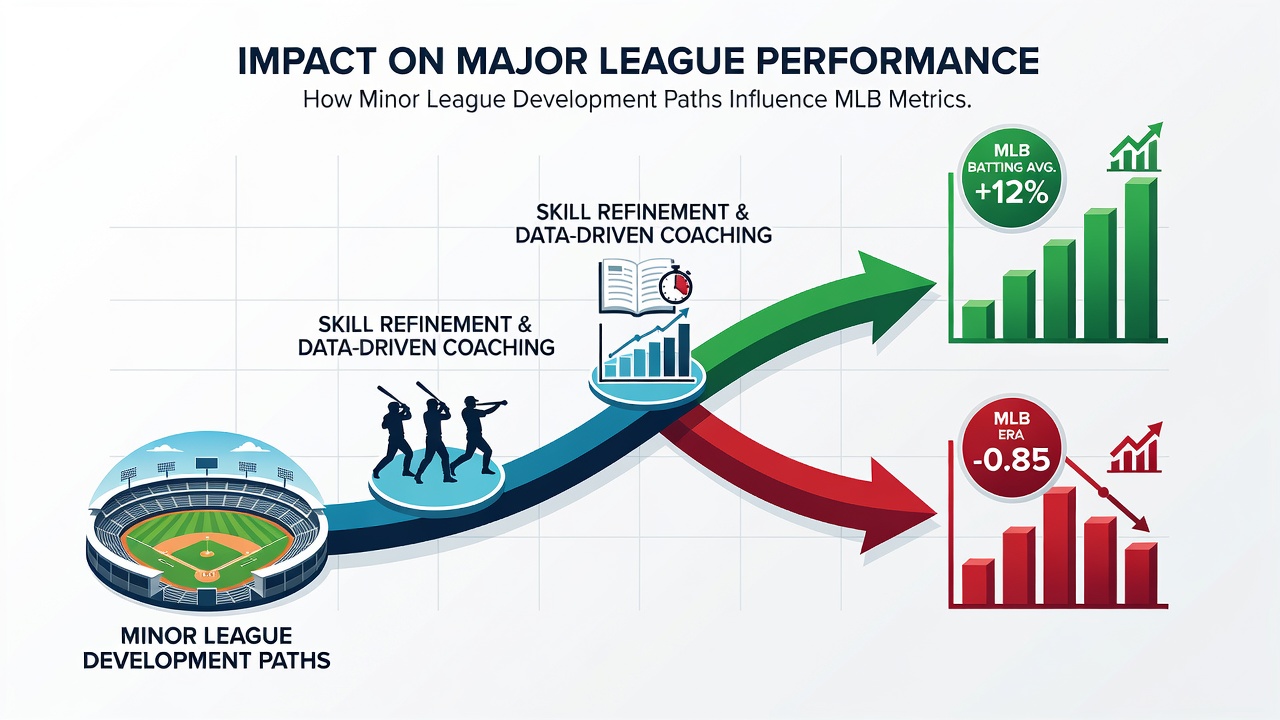
Recent patterns through the mid-2020s highlight how organizations use lower levels to introduce advanced grips and delivery tweaks, leading to improved ground-ball rates that suppress earned runs. Observers tracking performance data note that relievers who refined changeup usage during Double-A assignments carried those gains forward, contributing to sub-4.00 ERAs in their initial major league campaigns. Canadian-based affiliates have contributed to these outcomes by providing additional developmental innings in cooler climates, where pitchers refine endurance alongside velocity.
League-Wide Trends and Data Correlations
Comprehensive reviews of player statistics link longer minor league paths with steadier major league production, though individual outcomes vary based on position and role. According to performance databases maintained by professional baseball organizations, the average major league batting average for position players with extensive Triple-A experience hovered near .255 in recent seasons, while those with abbreviated paths averaged closer to .235. Similar patterns appear in pitching data, where earned run averages for starters with structured development routes remained below 4.20 across multiple years.
One study released by a research group affiliated with a Canadian university examined over 1,200 player careers and identified consistent connections between minor league plate appearances and major league on-base plus slugging percentages. Those findings align with reports from scouting networks that emphasize gradual progression through levels rather than rapid promotions. In June 2026, updated metrics from across both major circuits continued to reflect these established relationships, showing incremental improvements tied to affiliate-level instruction.
Conclusion
Minor league development paths serve as the primary mechanism for skill acquisition in North American baseball, directly shaping the batting averages and earned run averages observed at the major league level. Organizations continue to refine these systems through data-driven adjustments that target specific weaknesses before players reach the highest stage of competition. The resulting performance patterns demonstrate how structured progression through affiliates produces measurable outcomes in contact rates, pitch command, and overall statistical stability across seasons.