How Rule Changes Quietly Rewrote the Distribution of Scoring Opportunities Across Pro Leagues
Uma Foster · May 23, 2026
How Rule Changes Quietly Rewrote the Distribution of Scoring Opportunities Across Pro Leagues
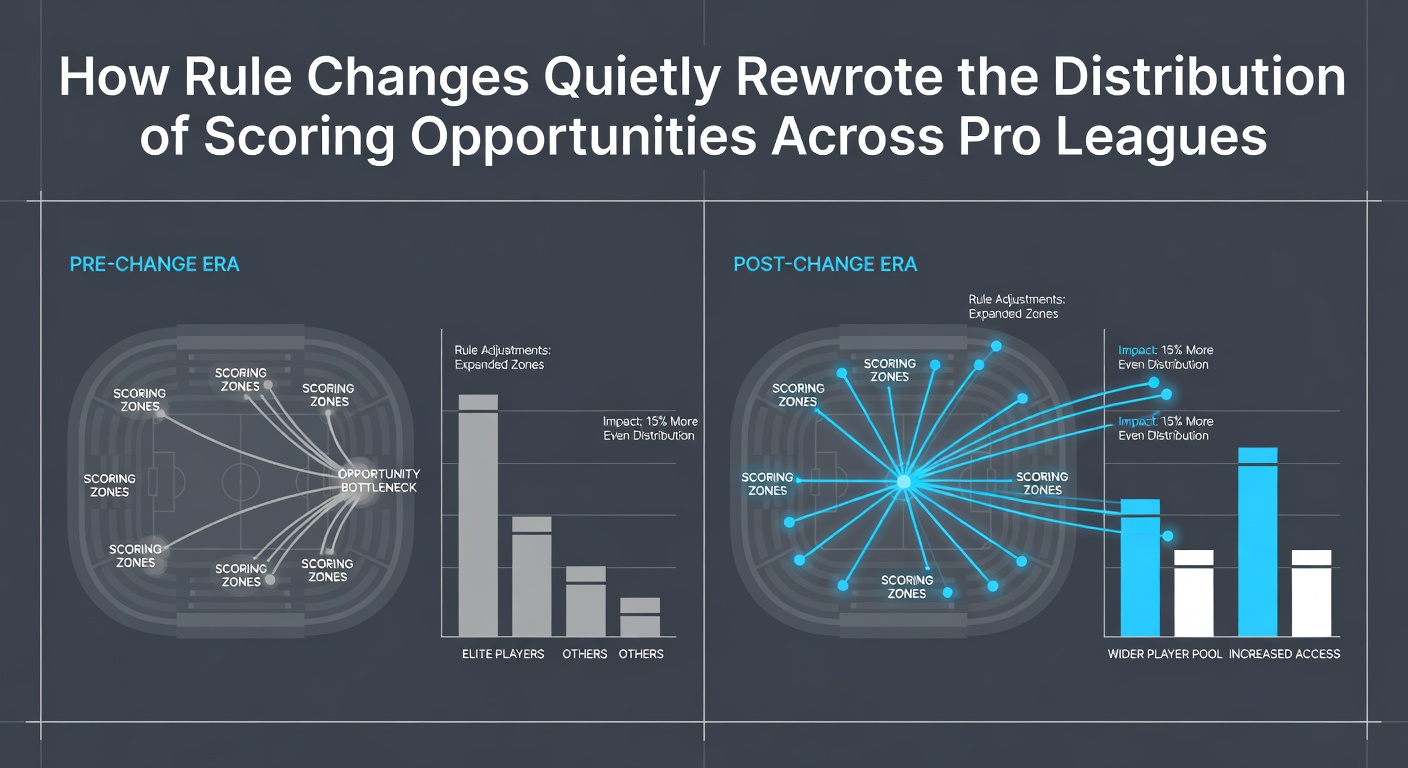
Rule modifications across professional sports have shifted where and how points accumulate, moving opportunities away from traditional hotspots toward new areas on the field or court, and data from multiple leagues illustrates these patterns without much fanfare. Leagues introduced tweaks to enhance flow or safety, yet the side effects redistributed scoring chances among positions and player types in measurable ways.
Basketball's Three-Point Emphasis and Perimeter Shifts
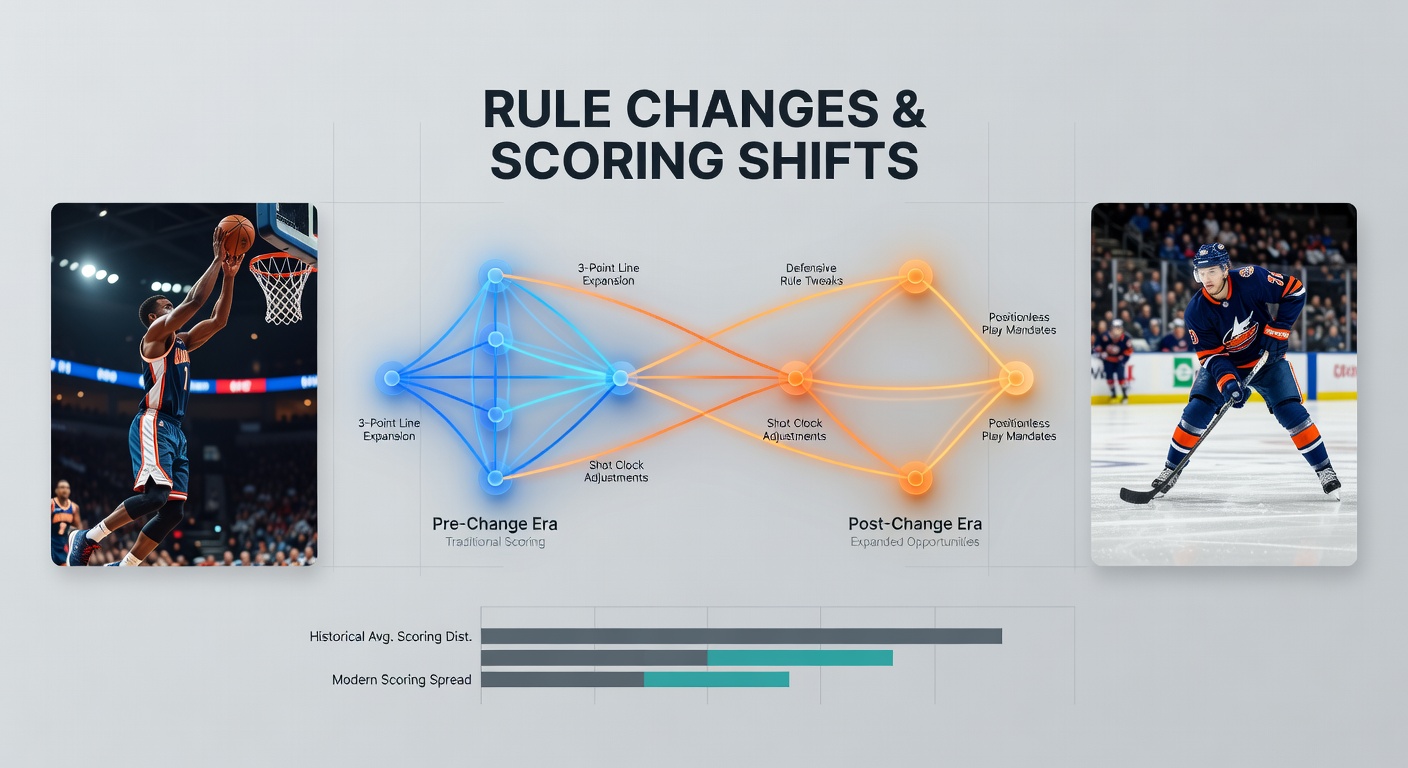
The NBA widened the three-point line gradually while adding defensive three-second rules in earlier decades, which encouraged spacing and reduced interior dominance, so teams now generate more points from beyond the arc than they did in the 1990s. Researchers tracking shot locations found that attempts from 25 feet and beyond rose steadily, pulling scoring away from big men near the basket and toward guards and wings who thrive in open space. Similar adjustments in European leagues followed comparable paths, with FIBA aligning distances closer to NBA standards by the mid-2010s, which produced parallel increases in perimeter production across continental competitions.
Soccer's Offside and Substitution Adjustments
FIFA and UEFA refined offside interpretations and VAR protocols in the late 2010s, allowing more fluid attacking movements that opened lanes for wingers and fullbacks rather than relying solely on central strikers. These changes coincided with temporary concussion substitutions introduced around 2021, giving coaches flexibility to keep attacking threats on the pitch longer and thereby altering goal tallies away from set-piece specialists toward open-play creators. Figures from UEFA competitions show assists from wide areas climbing relative to central positions, while leagues in South America adopted parallel video review systems that yielded comparable redistributions in scoring patterns.
American Football's Passing and Protection Evolutions
The NFL tightened rules on defensive contact with receivers in 2004 and refined roughing-the-passer penalties in subsequent years, which boosted completion percentages for quarterbacks and shifted production toward slot receivers and tight ends who operate in intermediate zones. League tracking data indicates that yards after catch from those positions grew as a share of total offense, while traditional deep-threat wideouts saw their relative share stabilize rather than expand. Canadian Football League officials implemented parallel emphasis on pass interference enforcement, producing similar trends in aerial distribution across their longer fields.
Hockey's Icing and Goaltender Rules
The NHL eliminated the two-line pass restriction in 2005 and adjusted hybrid icing rules later, which increased odd-man rushes and redistributed goals toward skilled puck-moving defensemen who join rushes more frequently. Goaltender equipment reductions and crease restrictions further limited net-front traffic goals, pushing scoring toward perimeter shots and deflections from mobile forwards. Data compiled by league statisticians reveals that even-strength goals from the point rose as a percentage of totals compared with pre-2005 benchmarks, while international bodies like IIHF mirrored several of these safety-oriented tweaks in their own competitions.
Baseball's pitching clock and defensive shift restrictions, implemented fully by 2023, shortened games and restored infield balance, which funneled more hits toward contact-oriented middle infielders instead of power corners who benefited from pulled-fly opportunities. Minor-league testing phases demonstrated these effects before major-league rollout, and similar timing rules appeared in Australian baseball circuits around the same period, yielding consistent upticks in singles and doubles from left-side positions.
Broader Patterns Across Leagues
Studies from academic sources, including work published through institutions in Canada and Australia, document how incremental safety and pace-of-play mandates compound over time, creating new archetypes of scorers who exploit the altered geometry of competition. Position groups once central to scoring tallies now share opportunities with previously secondary roles, while advanced tracking systems quantify the migration of high-value zones. Observers tracking May 2026 schedules note continued monitoring of these effects in ongoing seasons, as leagues fine-tune enforcement without wholesale reversals.
Conclusion
Across basketball, soccer, football, hockey, and baseball, the quiet accumulation of targeted rule adjustments has produced lasting changes in who scores and from where, supported by consistent statistical shifts rather than dramatic overhauls. These evolutions continue to shape roster construction and tactical priorities in each sport.