How Youth Academy Pipelines Have Redirected Talent Flows and Altered Mid-Career Longevity Patterns in Volleyball, Rugby Sevens, and Ice Hockey Leagues
Uma Foster · Jun 6, 2026
How Youth Academy Pipelines Have Redirected Talent Flows and Altered Mid-Career Longevity Patterns in Volleyball, Rugby Sevens, and Ice Hockey Leagues
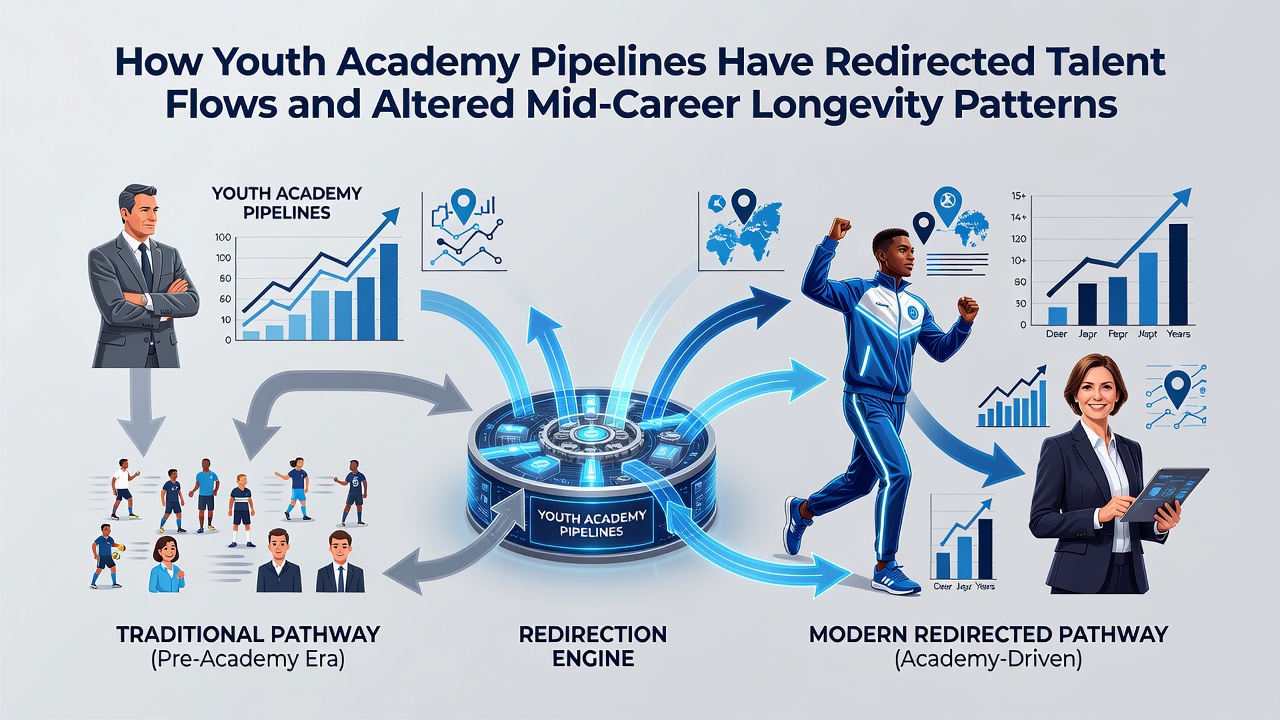
Youth academy pipelines in volleyball, rugby sevens, and ice hockey have shifted talent identification toward earlier ages while changing how players progress through professional ranks and sustain careers into their late twenties and early thirties. Structured programs now channel athletes from regional clubs into centralized training facilities where specialized coaching and medical support accelerate development yet also introduce new patterns of physical load and recovery management.
Volleyball Academy Systems and Career Trajectories
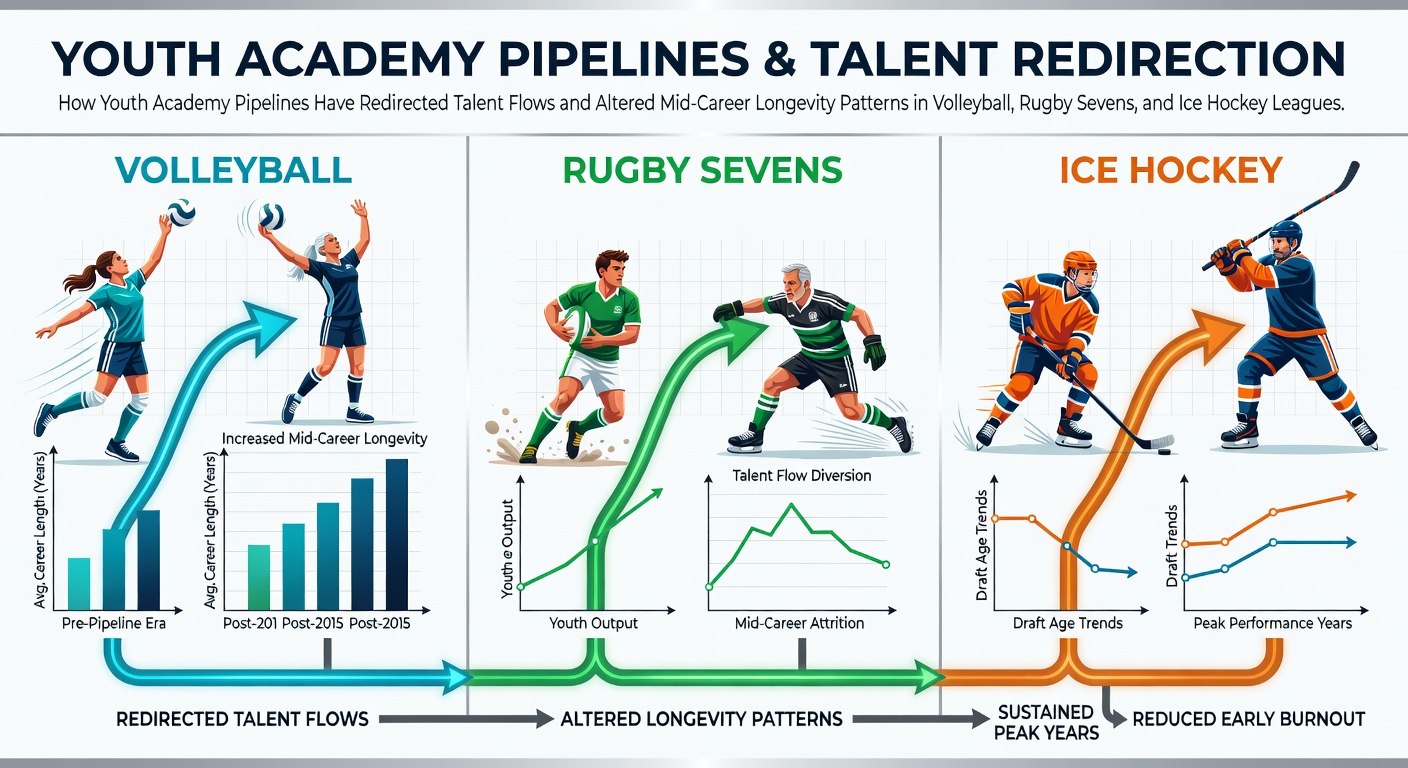
National federations and club academies in volleyball have expanded recruitment networks since the early 2010s, drawing athletes into full-time programs by age fourteen or fifteen in many European and South American countries. Data from the Fédération Internationale de Volleyball shows increased participation in age-group world championships, with a corresponding rise in professional contracts signed before athletes reach twenty years old. Those who enter these pipelines often receive year-round strength and conditioning plans that emphasize jump mechanics and shoulder stability, yet the compressed timeline means many players reach peak performance windows earlier than previous generations.
Mid-career longevity has adjusted accordingly, because early specialization correlates with higher rates of overuse injuries that can shorten careers after the initial professional surge. Observers note that athletes who transition through multiple clubs before twenty-five demonstrate longer active spans in top leagues when compared with those locked into single-academy pathways, although both groups benefit from improved biomechanical monitoring now standard in elite programs.
Rugby Sevens Development Pathways
Rugby sevens academies have grown rapidly since the sport's Olympic inclusion, particularly in Oceania and Europe, where national unions maintain residential programs that combine sevens-specific speed work with full-contact drills adapted from fifteen-a-side rugby. World Rugby reports indicate a steady increase in players signed to professional sevens contracts between ages eighteen and twenty-one, redirecting talent that previously flowed toward traditional fifteens leagues. This redirection concentrates high-velocity training loads during late adolescence, which studies link to altered recovery profiles once athletes enter senior international schedules.
Longevity patterns reflect these changes, because sevens calendars feature more frequent short tournaments than fifteens seasons, and academy graduates often manage accumulated fatigue through rotation policies introduced after 2020. Players who complete academy cycles show higher retention rates into their late twenties when national teams implement load-management protocols, while those who bypass structured pipelines sometimes enter the professional circuit later and maintain careers with fewer documented soft-tissue issues.
Ice Hockey Pipeline Effects on Player Durability
Ice hockey youth academies, especially in North America and Scandinavia, have refined scouting and development models that identify prospects by age twelve and place them in elite junior leagues with integrated academic support. The International Ice Hockey Federation tracks rising numbers of players drafted into professional leagues directly from these academies, bypassing traditional junior routes in some regions. This flow concentrates technical and tactical instruction while embedding advanced recovery technologies such as wearable monitoring and cryotherapy from an early stage.
Mid-career longevity data reveals mixed outcomes. Academy-trained players often post higher games-played totals through age twenty-eight when teams adopt individualized rest schedules, yet the same cohort experiences elevated concussion-related absences compared with earlier cohorts who progressed through less specialized systems. Research compiled by Hockey Canada and partner universities documents these trends through longitudinal injury registries that continue to inform policy adjustments as of June 2026.
Comparative Patterns Across the Three Sports
Across volleyball, rugby sevens, and ice hockey, academy pipelines share common mechanisms that redirect talent toward early professional exposure while reshaping longevity through medical oversight and periodized training. Talent that once moved laterally between clubs or national age groups now follows vertical tracks that prioritize measurable performance metrics at younger ages. The result appears in league rosters where the proportion of players under twenty-three has increased, while average career lengths for those who reach thirty have stabilized or slightly extended when supported by sports-science staff.
Geographic differences persist. European volleyball academies emphasize technical volume, Oceanian rugby sevens programs stress speed endurance, and North American ice hockey pathways focus on physical robustness. These regional emphases produce distinct longevity signatures that federations monitor through shared databases and exchange programs established in the past decade.
Conclusion
Youth academy pipelines continue to influence how talent moves through volleyball, rugby sevens, and ice hockey, producing earlier professional entry points and revised expectations for career duration. Ongoing data collection by international federations and national bodies supplies the evidence base for refining these systems, ensuring that performance gains do not come at the expense of long-term athlete availability.