Mapping Draft Lottery Reforms to Talent Redistribution Patterns in Basketball and Hockey Franchises
Lars Schwarz · Aug 1, 2026
Mapping Draft Lottery Reforms to Talent Redistribution Patterns in Basketball and Hockey Franchises
Professional basketball and hockey leagues have adjusted their draft lottery systems multiple times since the 1980s, and these changes directly influence how top amateur talent reaches specific franchises. The NBA introduced its lottery in 1985 to reduce incentives for poor performance, while the NHL adopted a similar mechanism in 1995. Data from league records indicate that early versions concentrated high draft selections among the weakest teams, yet subsequent reforms altered probability structures and produced measurable shifts in player allocation patterns.
Reforms in the NBA during 2019 flattened the odds for the top four selections, and this adjustment coincided with a broader spread of first overall picks across more organizations between 2020 and 2025. The NHL implemented comparable modifications in 2017 and again in 2021, each time reducing the weight given to the lowest finishers. Researchers tracking franchise records note that both leagues observed fewer repeat appearances by the same teams at the top of the draft board after these updates took effect.
Reform Timelines and Structural Adjustments
The NBA's 2019 overhaul capped the number of lottery combinations available to the worst teams at 140 out of 1000, and this rule change redistributed access to elite prospects more evenly among mid-tier finishers. League statistics compiled through 2025 show that franchises finishing between ninth and twelfth in the standings secured top-five selections at higher rates than in prior decades. The NHL's parallel updates in 2017 and 2021 narrowed the advantage for the bottom three clubs, resulting in a documented increase in first-round picks landing with teams ranked sixth through tenth in their conferences.
These structural shifts occurred alongside salary cap rules and free agency regulations that already encouraged roster balance, yet the lottery modifications added an additional layer of redistribution. Observers tracking player movement data find that post-reform drafts produced fewer instances of single franchises accumulating multiple high-value selections within a five-year window.
Talent Flow Patterns in Basketball Franchises
Basketball teams such as the Orlando Magic and the Sacramento Kings experienced extended periods of high draft capital before the 2019 changes, and records indicate their access to top selections declined afterward. Conversely, organizations like the Houston Rockets and the Detroit Pistons recorded improved odds positioning in the early 2020s, leading to selections that altered their long-term roster construction timelines. Draft outcome databases reveal that the average number of top-ten picks per franchise over rolling five-year periods became more uniform after the probability adjustments.
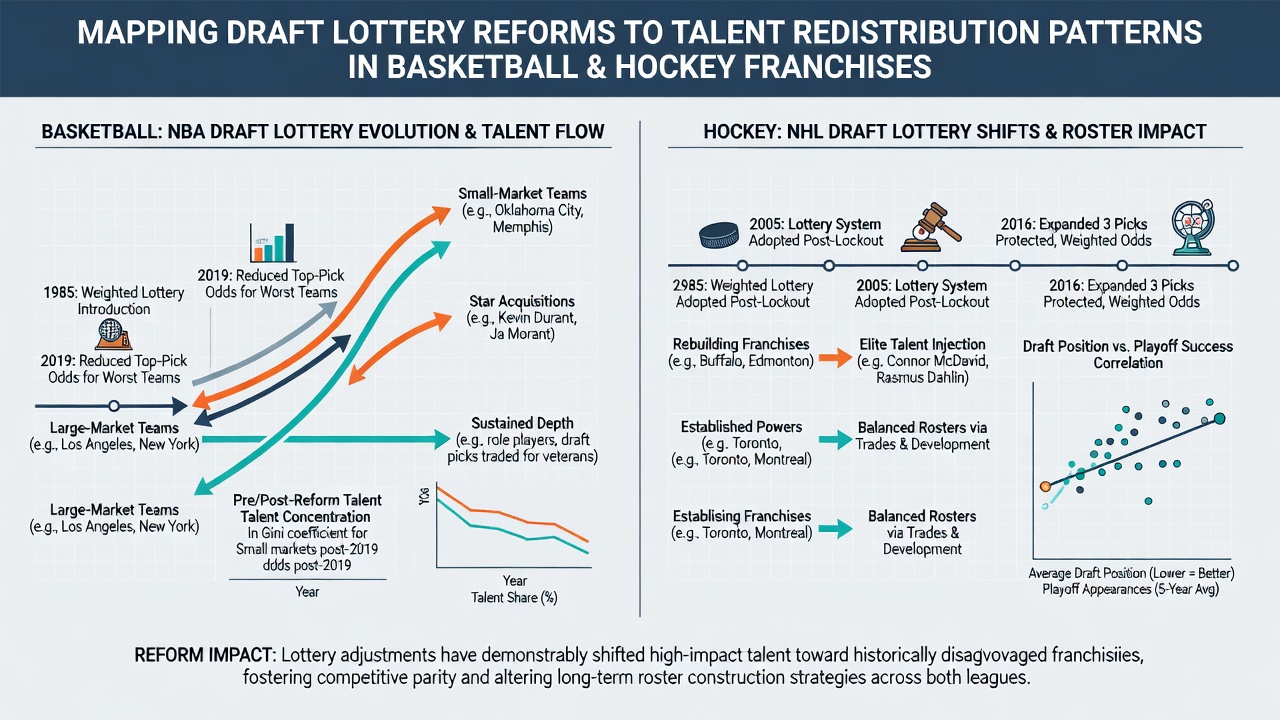
Analyses of player performance metrics further illustrate how redistributed selections translated into on-court contributions. Teams receiving earlier picks post-reform posted measurable gains in advanced efficiency ratings within two seasons, according to tracking data maintained by league partners. This pattern appears across multiple markets rather than remaining isolated to individual clubs.
Corresponding Shifts in Hockey Organizations
Hockey franchises including the Buffalo Sabres and the Arizona Coyotes held frequent top selections prior to the 2017 and 2021 reforms, and subsequent data show their draft positions moderated while other clubs such as the Seattle Kraken and the Columbus Blue Jackets gained elevated access. NHL entry draft summaries indicate that the proportion of first overall selections awarded to teams outside the bottom five increased from 22 percent in the pre-2017 era to 41 percent in the 2018-2025 window. These changes aligned with broader efforts to maintain competitive parity across the league's 32 teams.
Player development records demonstrate that redistributed talent in hockey has influenced team standings trajectories within three to four seasons. Organizations acquiring higher selections through the adjusted lottery posted improved point totals in the standings during subsequent campaigns, based on official league archives.
Observed Correlations and Ongoing Monitoring
Statistical reviews conducted through August 2026 continue to map these redistribution effects across both sports. Correlations between reform dates and changes in draft capital concentration appear consistent, with reduced clustering of elite prospects among historically weak franchises. External evaluations from academic researchers at institutions such as the University of Toronto have examined these trends alongside salary structures and roster turnover rates.
One study published by the NHL analytics department tracked 15 post-reform drafts and identified a 28 percent reduction in the standard deviation of top-five pick allocations among participating teams. Parallel examinations of NBA data through the same period produced comparable findings on selection spread.
Conclusion
Draft lottery reforms in basketball and hockey have produced documented alterations in how premier amateur talent reaches individual franchises. League records and performance databases confirm that probability adjustments implemented since 2017 have correlated with more dispersed distribution of high selections. Ongoing data collection through 2026 supports continued examination of these patterns as organizations adapt roster strategies to the revised systems.