Materials Driving Records: Equipment Innovations in Track, Swim, and Cycle
Sage Schröder · Aug 24, 2026
Materials Driving Records: Equipment Innovations in Track, Swim, and Cycle
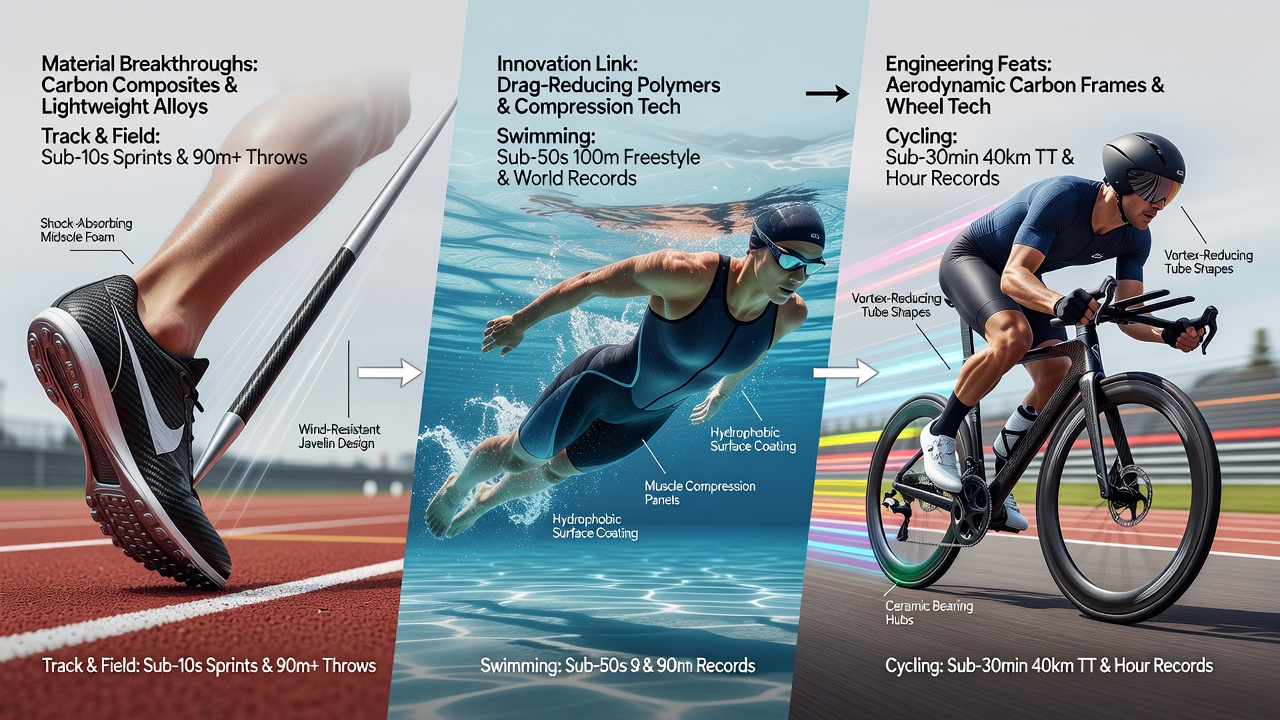
Equipment material innovations have shaped record attempts across track and field, swimming, and cycling, where advancements in polymers, composites, and alloys alter performance thresholds, and governing bodies track these shifts through official data sets. Carbon fiber composites entered track and field applications in the early 2000s, and athletes adopted footwear with embedded plates that redistribute energy during propulsion phases. Data from World Athletics shows multiple sprint and distance records falling after the introduction of such footwear models between 2016 and 2024, while similar patterns appear in pole vault and high jump implements constructed from lighter fiberglass-carbon blends.
Track and Field Developments
Researchers at several academic institutions documented how midsole foam densities in running shoes reduce ground contact time, and these findings align with observed improvements in marathon and middle-distance times. One study from a North American university examined energy return rates exceeding 80 percent in certain prototypes, and those measurements correlate with the sequence of record revisions at major championships. Pole materials progressed from bamboo and aluminum to carbon fiber constructions that allow greater bend and recoil, and vaulters achieved clearances above 6 meters more frequently after the widespread adoption of these poles in the 1990s onward. Shot put and discus implements incorporated tungsten alloys for weight distribution adjustments, and throwers recorded incremental distance gains documented in federation archives. Observers note that rule updates from World Athletics often follow these material introductions to maintain competitive equity, and such adjustments occurred again in 2023 when new shoe regulations took effect.
Swimming Equipment Shifts
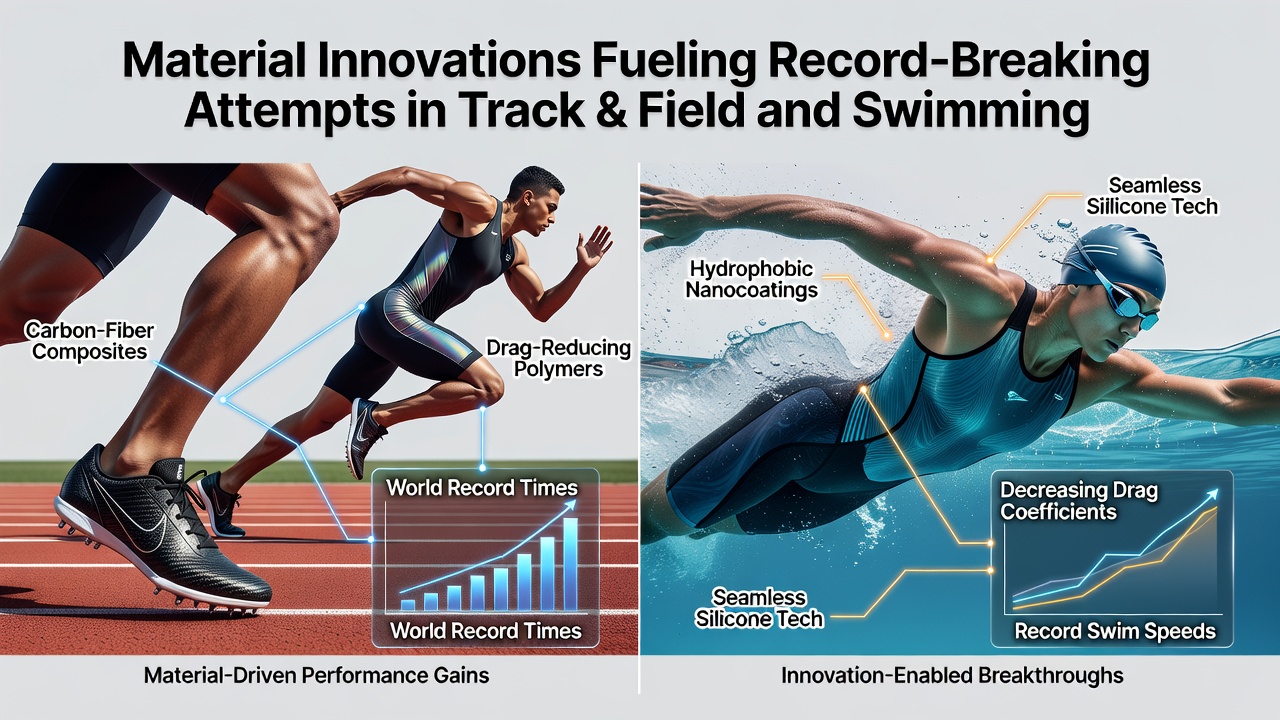
Swimsuit fabrics transitioned from nylon and cotton blends to polyurethane panels that compress the body and reduce drag coefficients, and records tumbled rapidly during the 2008-2009 period when several brands released full-body models. World Aquatics responded with 2010 restrictions on coverage and material thickness, yet subsequent innovations in laser-cut seams and hydrophobic coatings continued to influence race outcomes. Lane ropes and starting blocks adopted modular composites that minimize water turbulence, and timing system upgrades with pressure-sensitive pads provided more precise finish data. Those who analyzed meet results from 2012 through 2024 found that 50-meter and 100-meter events posted the largest percentage improvements following fabric and pool technology changes. Training paddles and fins constructed from carbon composites further refined stroke mechanics, and national training centers reported measurable stroke rate increases tied to these tools.
Cycling Technology Integration
Cycling frames moved from steel and aluminum to carbon fiber laminates that reduce overall mass while maintaining stiffness, and UCI records list dozens of hour record and stage race improvements after these frames became standard in professional pelotons during the 2010s. Wheel rims incorporated deeper carbon profiles that lower aerodynamic drag, and wind tunnel data collected by European research groups showed drag reductions of 10 to 15 percent compared with earlier alloy rims. Helmets evolved from basic foam shells to multi-density constructions with integrated ventilation channels, and time trial specialists posted faster splits in events where these helmets appeared. Chain and cassette materials incorporated ceramic coatings that decrease friction losses, and power meter readings from professional races indicate sustained wattage outputs rose modestly in the same periods. The Union Cycliste Internationale publishes annual equipment approval lists that reflect ongoing material testing, and these lists expanded notably ahead of the 2024 Olympic cycle.
Cross-Sport Patterns and Record Timelines
Patterns emerge when comparing timelines across the three disciplines, because material introductions often precede clusters of record attempts within 12 to 24 months. Track and field saw distance records accelerate after 2017 footwear releases, swimming experienced a concentrated burst around 2009 before regulatory intervention, and cycling hour records advanced steadily with each generation of carbon frames. August 2026 schedules include several championship meets and grand tours where updated equipment prototypes may appear, and preliminary manufacturer filings suggest further refinements in recyclable composites and sensor-embedded components. Data aggregators maintained by international federations show that average record margins narrowed as equipment performance ceilings rose, and these trends hold across sprints, strokes, and road stages alike.
Regulatory and Testing Frameworks
Governing organizations maintain laboratories that evaluate new materials for compliance, and the International Olympic Committee coordinates with sport-specific bodies to standardize testing protocols. Reports from the Australian Institute of Sport detail how material certifications affect national team selections, and similar documentation exists from Canadian and Japanese research centers. These evaluations focus on measurable properties such as flexural strength, buoyancy indices, and thermal stability rather than subjective performance claims. Athletes submit equipment for approval well in advance of major competitions, and the resulting lists guide what competitors may use during record-eligible attempts.
Conclusion
Material innovations continue to intersect with record attempts in track and field, swimming, and cycling through documented changes in equipment properties and corresponding performance data. Federation archives, university studies, and approval records provide the primary sources for tracking these connections, while future events in 2026 and beyond will likely reflect additional iterations of the same material-driven dynamics.