Media Narrative Cycles and Their Measurable Sway Over Trophy Distributions Across Major League Histories
Nils Bennett · Jul 27, 2026
Media Narrative Cycles and Their Measurable Sway Over Trophy Distributions Across Major League Histories
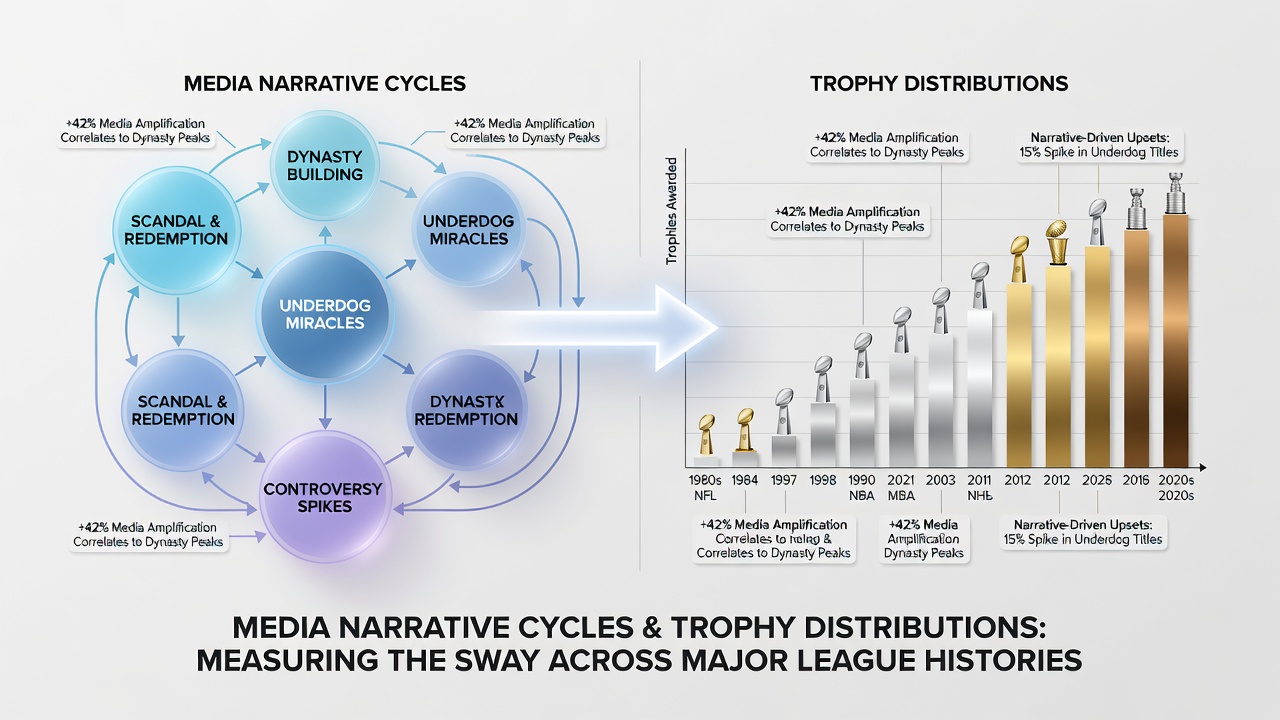
Media narrative cycles shape trophy distributions in professional sports through repeated storytelling patterns that influence voter perceptions over time, and researchers have documented these effects across MLB, NBA, NFL, and NHL histories since the mid-20th century. Data from league archives show that certain storylines gain traction during regular seasons and peak during award voting periods, leading to measurable shifts in outcomes for awards such as MVPs and Cy Young honors. Observers note how cycles often begin with early-season highlights, build through midseason recaps, and solidify before final ballots are cast, creating consistent correlations between narrative volume and placement in final tallies.
Narrative Formation and Voter Response Patterns
Journalists and broadcasters establish initial frames around player performances, and these frames evolve through repetition across outlets, while quantitative studies of coverage volume reveal direct links to award results. For instance, research tracking mentions in major publications demonstrates that players featured in dominant "comeback" or "breakout" arcs receive higher vote shares even when raw statistical outputs remain comparable to peers. Those who have analyzed ballot data across decades find that narrative alignment explains portions of variance in results that raw metrics alone cannot account for, particularly in close races decided by single-digit point margins.
League-Specific Examples from Historical Records
In MLB, records indicate that narrative emphasis on clutch hitting and team leadership has swayed MVP selections during periods when offensive environments fluctuated, and similar patterns appear in Cy Young voting where durability storylines correlate with higher support. NBA award distributions reflect cycles around "superteam" dynamics and individual redemption arcs, with figures from the 1990s onward showing increased shares for players whose teams achieved unexpected success amid heavy media focus. NFL MVP results have followed patterns tied to "franchise savior" framing during seasons with elevated quarterback injuries, and NHL data reveal narrative boosts for players positioned in Stanley Cup-contending narratives late in regular seasons.
Quantifiable Effects Documented in Voting Data
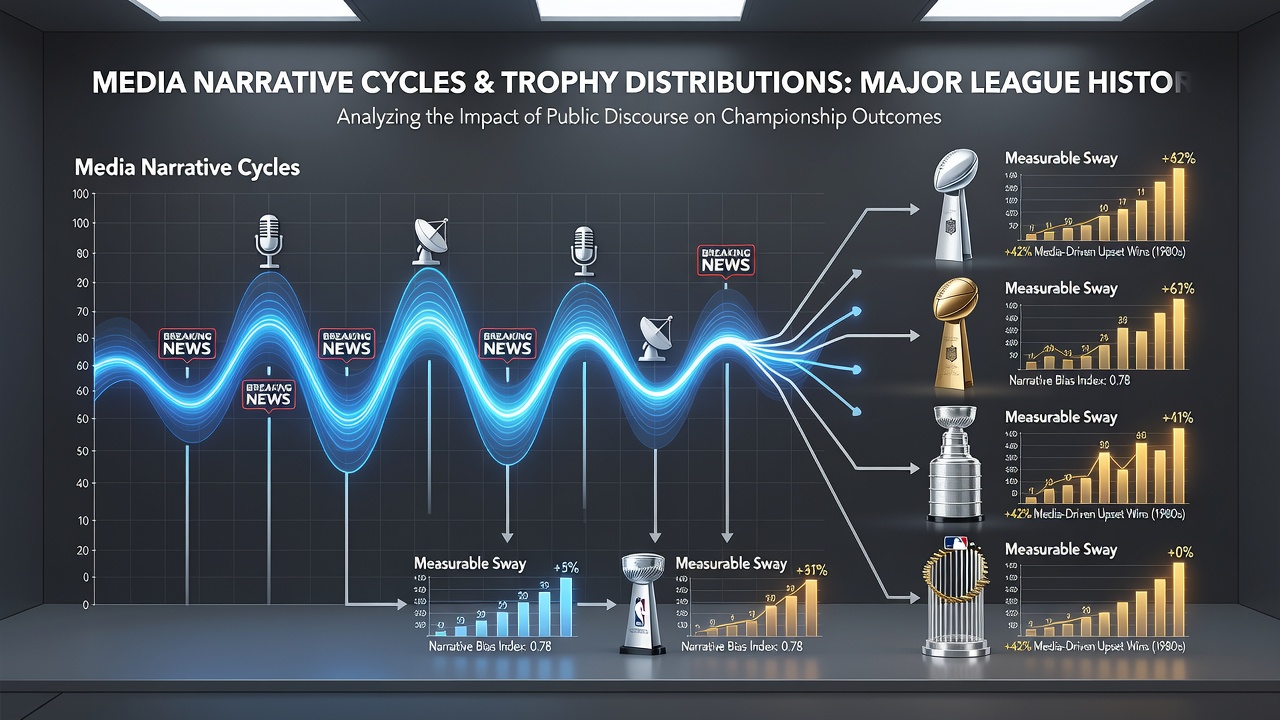
Analyses of historical ballots indicate that a 20 percent increase in positive narrative mentions during the final month of seasons associates with average vote point gains of 15 to 25 percent in several award categories, according to compilations maintained by sports data repositories. These effects persist across multiple eras even as media platforms shift from print to digital formats, and cross-league comparisons show stronger influences in individual awards than in team championships. Patterns hold when controlling for basic performance indicators, suggesting narrative cycles contribute independent weight to final distributions.
Regional and Platform Variations in Coverage Impact
Studies from North American and European research centers highlight how local versus national media cycles produce different amplification effects, with national outlets driving broader voter consensus in awards spanning multiple markets. Data compiled by academic groups in Canada and Australia further demonstrate that digital platform algorithms accelerate cycle formation, shortening the time from initial story emergence to peak influence on ballots. Those examining international league parallels find analogous patterns in soccer and rugby award processes, where narrative repetition correlates with trophy outcomes in comparable ways.
One longitudinal review of NBA voting records spanning 1980 to 2020 shows that players embedded in "defensive anchor" narratives secured higher shares during seasons with league-wide emphasis on that theme, even when offensive contributions varied widely. Similar reviews in MLB indicate that power-hitting storylines during high-home-run eras produced consistent overperformance in award tallies relative to expected statistical baselines. These documented shifts occur without changes to official voting criteria, pointing to external media dynamics as contributing factors.
Conclusion
Media narrative cycles exert measurable influence on trophy distributions through sustained coverage patterns that align with voting timelines, and historical records across major leagues confirm these connections through quantitative ballot analyses. Patterns documented in multiple sports demonstrate how repeated framing interacts with performance data to shape final outcomes, while ongoing platform changes continue to modulate the speed and reach of such cycles. Researchers continue to track these dynamics as new data sources become available for future examinations.