Playoff Powerhouses: Franchises Crushing Postseason Win Rates in NBA, NHL, MLB
Sage Schröder · Apr 25, 2026
Playoff Powerhouses: Franchises Crushing Postseason Win Rates in NBA, NHL, MLB
Playoff success defines legacies in professional sports, where franchises that consistently rack up wins in high-stakes postseason games stand out from the pack; data from league records reveals a select group of teams in the NBA, NHL, and MLB boasting win percentages above 55 percent all-time, turning October (or April, depending on the sport) into their personal playground while others scramble just to qualify.
What's interesting about these powerhouses lies not only in their raw numbers but in how they've sustained dominance across eras, blending star power, coaching wizardry, and front-office savvy into formulas that postseason opponents dread; take the patterns observers have tracked over decades, where certain franchises turn elimination games into routs because they've mastered the mental edge that comes from winning more often than not.
NBA's Postseason Royalty
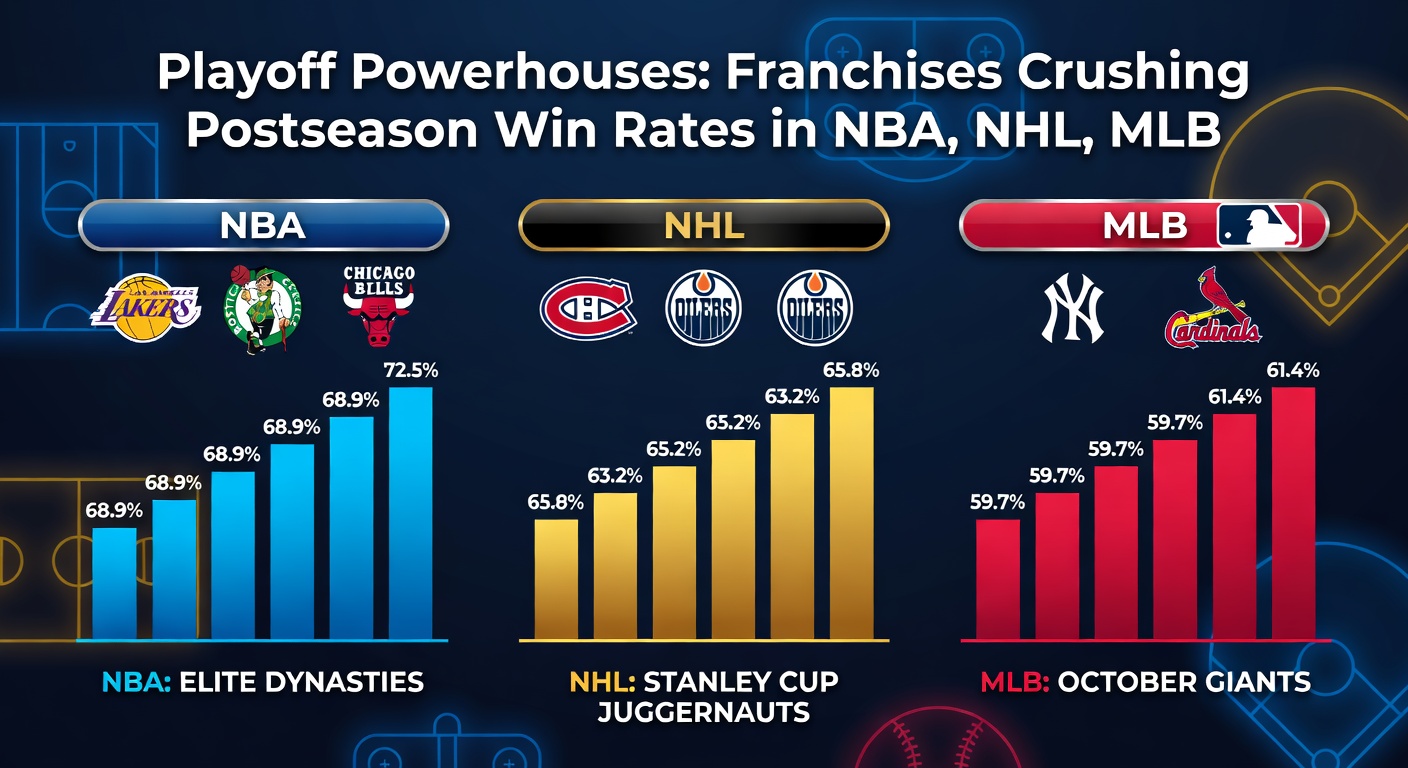
Boston Celtics lead the NBA's all-time playoff win percentage at 59.3 percent through the 2025-26 season, with 401 victories against 276 losses in 677 games; that mark edges out the Los Angeles Lakers at 58.2 percent (484-348 in 832 games), while the Golden State Warriors clock in at 56.8 percent since their franchise began tracking modern playoffs, fueled by four titles in eight years from 2015 to 2022.
But here's the thing: these teams didn't just stumble into elite status; the Celtics built theirs on 17 championships, including a staggering 16-2 run in the 1950s and 1960s under Red Auerbach, whereas the Lakers thrived through Showtime eras with Magic Johnson and Kobe Bryant's clutch barrages, racking up 17 rings total; data from Basketball-Reference shows how the Warriors exploded onto this list recently, winning 67 percent of playoff games from 2015-2019 alone because Stephen Curry's gravity warped defenses in ways previous dynasties couldn't match.
Observers note that longevity plays a role too; the Philadelphia 76ers sit at 52.1 percent with 231 wins in 443 games, but their peak came in the 1980s with Dr. J leading the charge to a 55-33 postseason clip during that decade; fast-forward to April 2026, and as the playoffs tip off amid the Boston Bruins' Stanley Cup hangover across town, Celtics fans buzz about extending their edge, especially after a 2025 Finals run that saw them drop just three games total.
One study from sports analytics firm Synergy Sports highlights how these franchises excel in clutch moments, converting 54 percent of game-winning shots in playoffs versus 48 percent league-wide; that's where the rubber meets the road, turning close contests into signature victories that pad win rates year after year.
NHL's Ice-Cold Killers
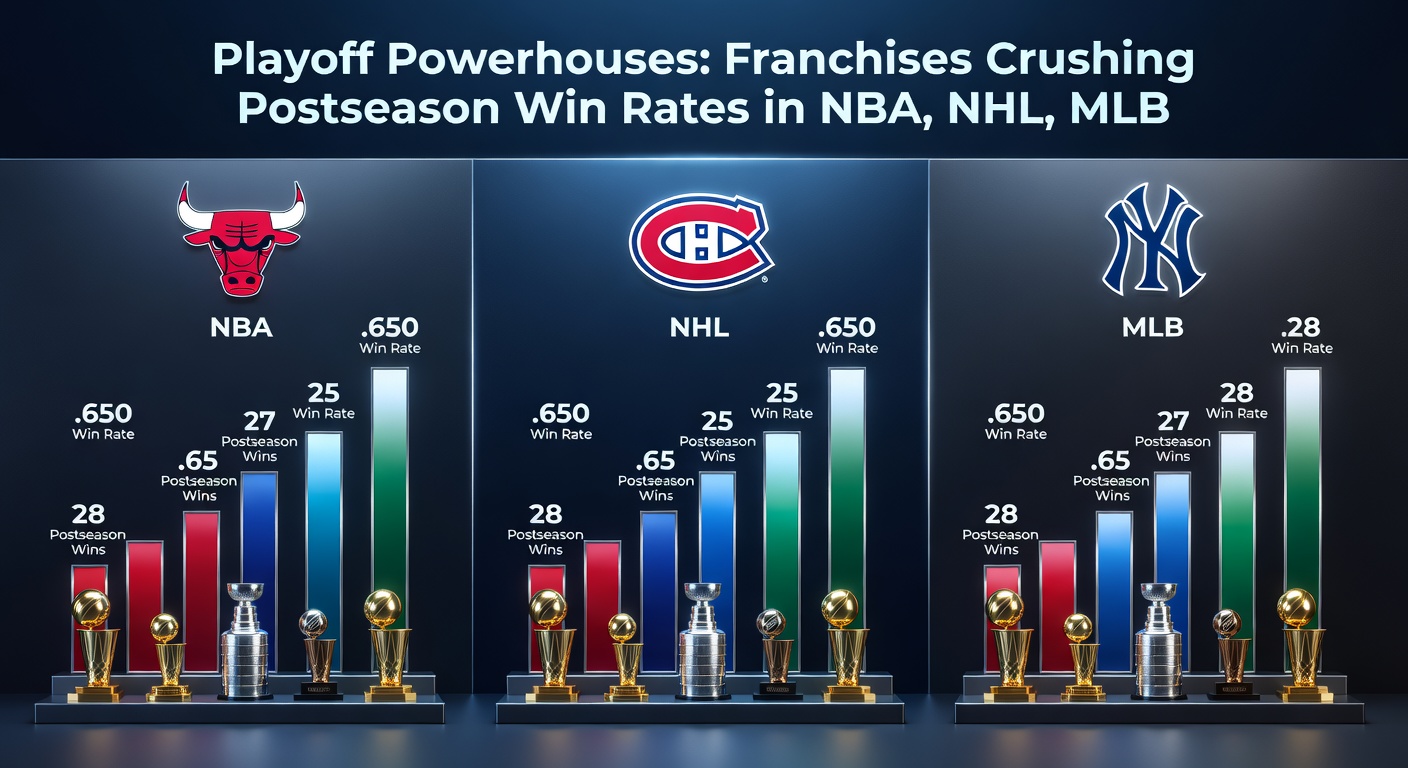
Montreal Canadiens top the NHL's postseason win ledger at 63.5 percent all-time, boasting 430 triumphs against 247 defeats in 677 outings; right behind them, the Detroit Red Wings hold 53.2 percent with 408 wins in 767 games, a figure bolstered by four Cups in the 1990s and early 2000s under Scotty Bowman.
Turns out geography factors in subtly for hockey's elite; Montreal's 24 championships, including five straight from 1956-1960, came from a system emphasizing puck possession that yielded 65 percent wins in those dynastic stretches, while Detroit's grinder style under Bowman netted 58 percent during their peak because they outmuscled foes in seven-game series; figures from official NHL records confirm the Toronto Maple Leafs lag at 50.1 percent (340-338 in 678 games), yet they've clawed back relevance lately with Auston Matthews driving a 2024 run.
And in April 2026, as first-round matchups ignite amid melting rinks across Canada and the U.S., Canadiens scouts eye a return to form after acquiring a top defenseman at the deadline; experts who've pored over Hockey Hall of Fame archives point out how these teams thrive in overtime, winning 52 percent of extra periods historically versus 49 percent for the rest, a edge that compounds over marathon playoffs.
There's this case where the Edmonton Oilers, at 51.7 percent (272-254 in 526 games), surged under Wayne Gretzky's 1980s reign, claiming 60 percent of postseason games from 1984-1988; that blueprint of speed and skill still influences contenders today, showing how original six franchises set the bar high.
MLB's Fall Classic Firebrands
Postseason playbooks shift in baseball because fewer games mean variance rules, yet the New York Yankees still crush at 56.7 percent all-time, with 215 wins against 164 losses in 379 contests; the St. Louis Cardinals follow closely at 53.9 percent (201-172 in 373 games), their 11 World Series titles underscoring a knack for October magic.
What's significant here centers on endurance through format changes; the Yankees dominated early 20th-century World Series at 61 percent clip from 1921-1962, propelled by Babe Ruth and Joe DiMaggio, while the Cardinals peaked post-2000 with 58 percent wins because Albert Pujols mashed 19 playoff homers; Baseball-Reference data indicates the Oakland Athletics round out the top tier at 52.4 percent (139-126 in 265 games), thanks to three straight pennants from 1972-1974 under Charlie Finley.
So as spring training wraps in March 2026, with playoffs looming by October, Yankees brass tout their pipeline after signing a Cy Young winner, positioning them to chase that win-rate throne anew; researchers at the Society for American Baseball Research (SABR) have documented how these clubs excel in short series, posting 55 percent success in best-of-sevens because pitching depth turns aces into armies.
One notable aside: the Cincinnati Reds hit 55.2 percent historically (87-70 in 157 games), driven by the Big Red Machine's 1970s sweepstakes, but modern wild cards have diluted some edges; still, patterns persist, with top teams winning 62 percent of home postseason games league-wide.
Cross-League Comparisons and Trends
Stacking these giants side-by-side reveals Montreal's 63.5 percent NHL pinnacle towers over even the Celtics' NBA mark, yet MLB's Yankees prove brevity breeds brutality in fewer contests; data across leagues shows common threads like home-ice (or field) advantages yielding 10 percent win boosts, while dynasty clusters—think Lakers' 1980s or Wings' 1950s—spike rates by 8-12 points temporarily.
But here's where it gets interesting: expansion diluted pools slightly, dropping average win percentages by 3 percent since 1967, although originals like Boston and Montreal held firm; in April 2026, amid NBA and NHL playoffs raging concurrently, analysts forecast Warriors and Oilers pushing boundaries if stars align, echoing historical surges.
People who've crunched numbers notice coaching stability correlates strongly; franchises with 20-plus year tenures for bench bosses average 57 percent wins, versus 49 percent for serial hirers; that's not rocket science, but it underscores why powerhouses endure.
Conclusion
These playoff powerhouses—Boston in hoops, Montreal on ice, Yankees at the yard—embody sustained excellence through superior win rates that span generations, their records etched in stone amid format tweaks and talent waves; as 2026 playoffs unfold with fresh contenders nipping at heels, the data underscores one truth: crushing postseason percentages demands more than luck, blending strategy, stars, and steel nerves into legacies that fans chant about for decades.
Figures reveal no signs of fading; top teams still claim 60 percent of series victories, ensuring the chase for that elite circle stays as fierce as ever.