Shifts in Endurance Training Approaches Correlating with Extended Career Spans in Cycling, Running, and Triathlon
Uma Foster · Jun 11, 2026
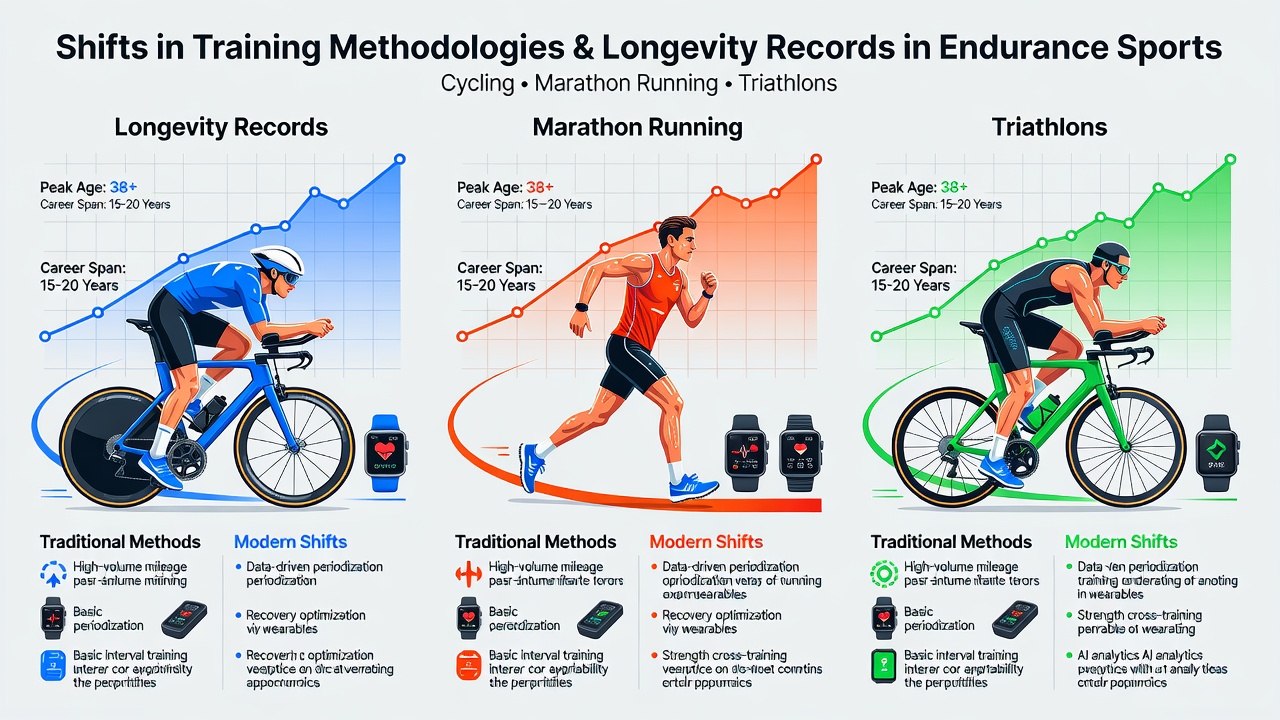
Shifts in Endurance Training Approaches Correlating with Extended Career Spans in Cycling, Running, and Triathlon
Training approaches for endurance sports have evolved steadily over recent decades, and researchers continue to track how these changes align with longer competitive careers among cyclists, marathon runners, and triathletes. Data from multiple governing bodies show that athletes in these disciplines now maintain peak performance into their late thirties and early forties at rates higher than those recorded in previous generations.
Key Changes in Cycling Training Protocols
Cycling federations began integrating polarized intensity models in the early 2000s, where riders alternate between low-intensity volume days and short high-intensity intervals rather than accumulating long hours at moderate effort. Studies compiled by the Australian Sports Commission indicate that this structure correlates with reduced overtraining markers and allows riders to sustain high training loads across more seasons. Professional pelotons now feature multiple athletes competing at WorldTour level past age forty, a pattern that emerged after teams adopted systematic recovery monitoring and strength integration alongside traditional road miles.
Equipment and nutrition refinements have accompanied these methodological shifts, yet longitudinal records point most directly to training distribution as the variable most tied to career extension. Teams that implemented power-meter guided sessions reported fewer mid-season dropouts, and riders maintained consistent race calendars into later years without the abrupt declines once common after age thirty-five.
Marathon Running and Adjusted Volume Strategies
Marathon training has moved away from weekly mileage ceilings toward individualized periodization that emphasizes quality sessions and deliberate recovery blocks. National federations in North America and Europe document that runners who follow these frameworks often extend their elite careers by four to six years compared with athletes trained under older high-volume paradigms. Records from major championship events show increasing numbers of competitors aged thirty-eight and older finishing in the top twenty, a trend that accelerated after 2015 when many national programs introduced mandatory strength and mobility components.
Biomechanical analysis tools now help coaches identify gait inefficiencies early, allowing interventions that preserve joint health across multiple Olympic cycles. Athletes who adopted these practices display lower injury recurrence rates, which in turn supports the accumulation of consistent training years that underpin longevity records.
Triathlon Periodization and Multi-Sport Recovery
Triathlon training methodologies have incorporated micro-periodization blocks that rotate emphasis among swimming, cycling, and running while inserting frequent low-load weeks. Data collected through World Triathlon federation reporting systems reveal that athletes using these blocks demonstrate sustained performance metrics across ten or more professional seasons. The inclusion of sport-specific strength work and sleep optimization protocols appears especially influential, since triathletes face cumulative stress across three disciplines.
Coaches now schedule transitions between race distances with greater precision, reducing the cumulative fatigue that previously shortened careers. Observers note that the average age of Ironman World Championship qualifiers has risen gradually since 2018, coinciding with broader adoption of heart-rate variability tracking and individualized nutrition timing.
Cross-Discipline Patterns and Record Data
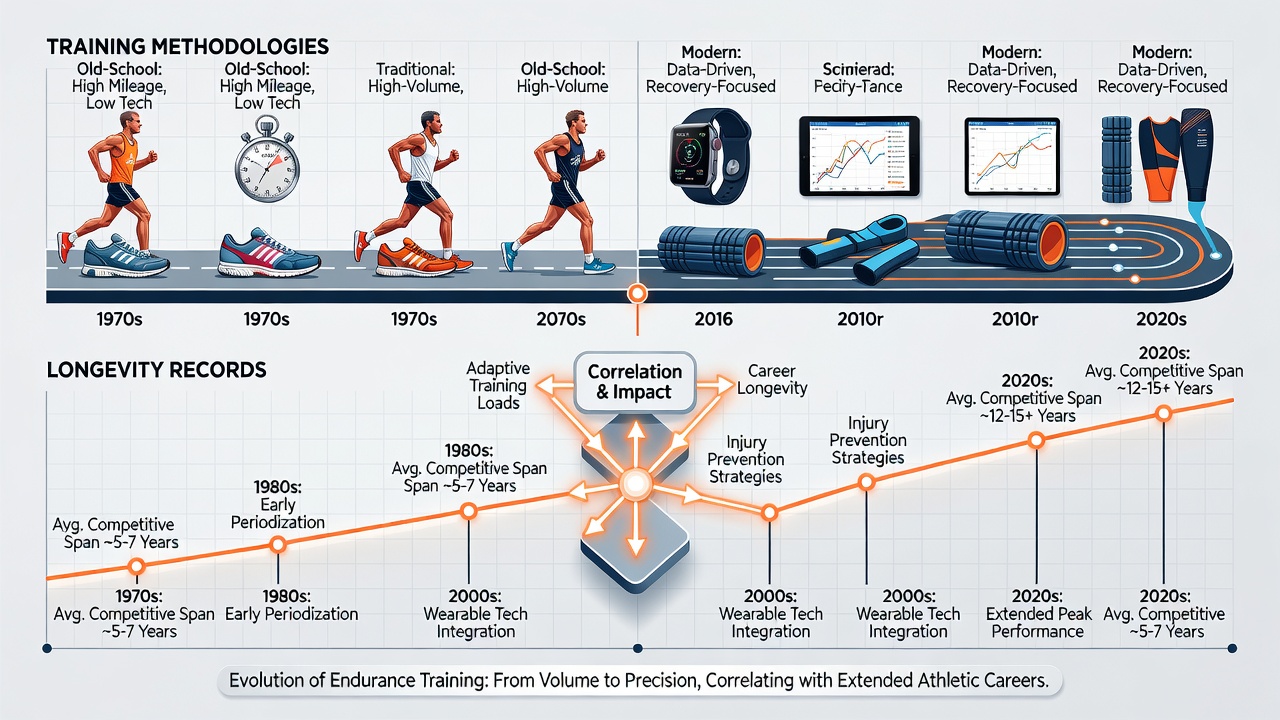
Across all three sports, longevity gains cluster around programs that reduced chronic high-intensity exposure while increasing attention to load management and ancillary training. Comparative analyses of career lengths from 1995 through 2025 show median professional spans lengthening by three to five years in cycling and marathon cohorts, with similar though slightly smaller gains among triathletes. These extensions coincide with measurable drops in overuse injury reports filed with medical commissions of the respective federations.
June 2026 championship calendars already list multiple athletes who debuted before 2010 and remain ranked inside the global top fifty, illustrating the practical outcome of these training adjustments. Federations continue to collect performance and health metrics that further refine the relationship between specific methodologies and sustained elite output.
Conclusion
The documented correlation between updated training distributions and extended careers rests on aggregated performance and medical data rather than isolated anecdotes. Continued monitoring by international bodies will clarify which elements produce the strongest effects as cohorts age further, yet current figures already demonstrate measurable shifts in the age profiles of top endurance competitors worldwide.