Tracing the Quiet Evolution of Synthetic Turf That Altered Pivot Mechanics and Recovery Patterns for Field Hockey Defenders, American Football Linebackers, and Soccer Midfielders Since the 1970s
Nils Bennett · Jun 27, 2026
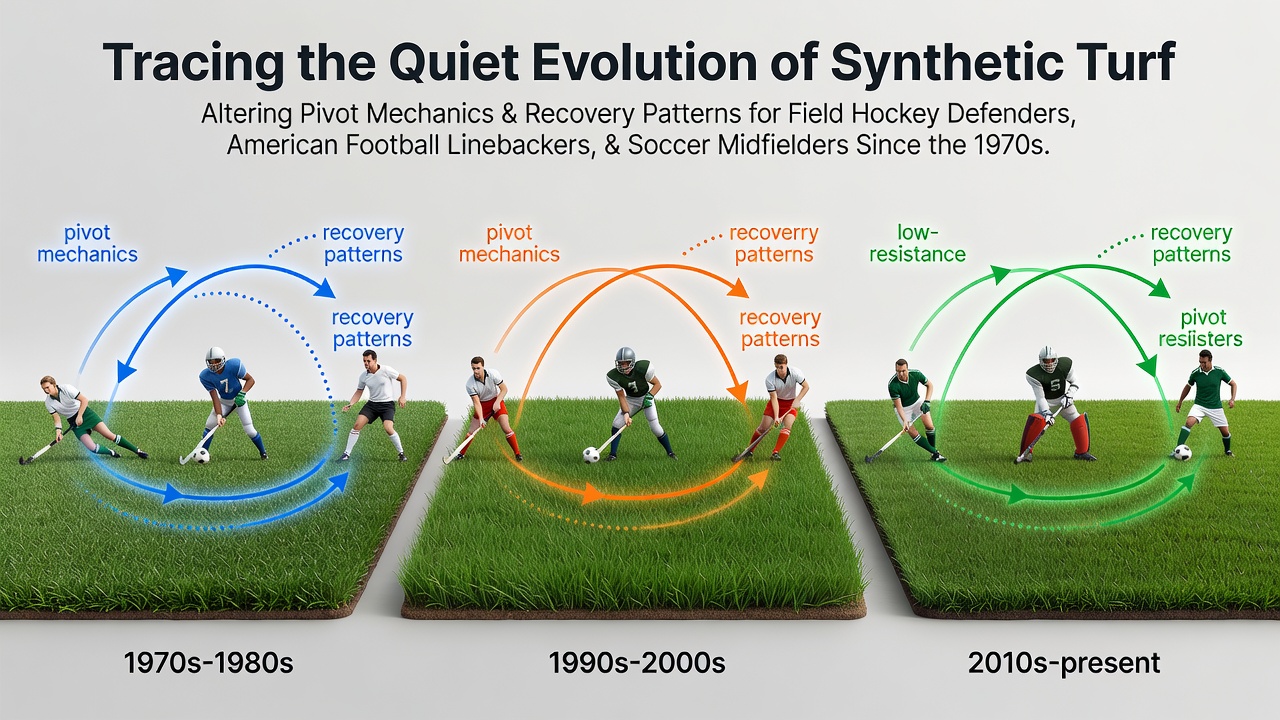
Tracing the Quiet Evolution of Synthetic Turf That Altered Pivot Mechanics and Recovery Patterns for Field Hockey Defenders, American Football Linebackers, and Soccer Midfielders Since the 1970s
Developments in synthetic turf began gaining traction during the 1970s as manufacturers moved beyond initial carpet-like surfaces toward more durable options that could handle heavy use in multiple sports, and these shifts started influencing how athletes executed rapid directional changes. Field hockey programs in Europe adopted early versions for indoor and outdoor pitches where natural grass struggled with maintenance, while American football teams in the United States experimented with similar materials on stadium fields to extend playing seasons.
Initial Material Changes and Movement Adaptations
By the late 1970s, fiber technology advanced from short nylon blades to longer polyethylene strands that provided slightly more give underfoot, and data from early biomechanical assessments indicated that players adjusted their pivot angles to account for reduced slide compared with grass. Field hockey defenders, who frequently plant and turn to mark attackers, encountered surfaces that offered consistent traction regardless of weather, leading to modified footwork patterns documented in coaching manuals from that era. American football linebackers similarly altered their read-and-react steps on these fields, as the firmer base reduced some natural give that grass provided during lateral bursts.
Recovery timelines also began showing measurable differences once teams tracked injury data across seasons, with midfielders in soccer noting that repeated pivots on synthetic surfaces sometimes correlated with shorter soft-tissue recovery windows when compared with variable grass conditions. Researchers at institutions in Australia compiled reports showing how infill materials introduced in the 1980s helped moderate surface temperatures and friction, allowing athletes to maintain higher training volumes without proportional increases in certain strain injuries.
Expansion Across Sports in the 1990s and 2000s
The 1990s saw wider adoption in professional leagues, and governing bodies such as the Fédération Internationale de Football Association established testing protocols that standardized shock absorption and rotational resistance values. Soccer midfielders benefited from these standards as they covered greater distances with frequent turns, while field hockey defenders used the uniform bounce to refine stick-handling transitions during defensive sets. American football programs incorporated hybrid turf systems that combined synthetic fibers with natural grass roots, resulting in pivot mechanics that more closely mimicked outdoor fields yet offered year-round usability.
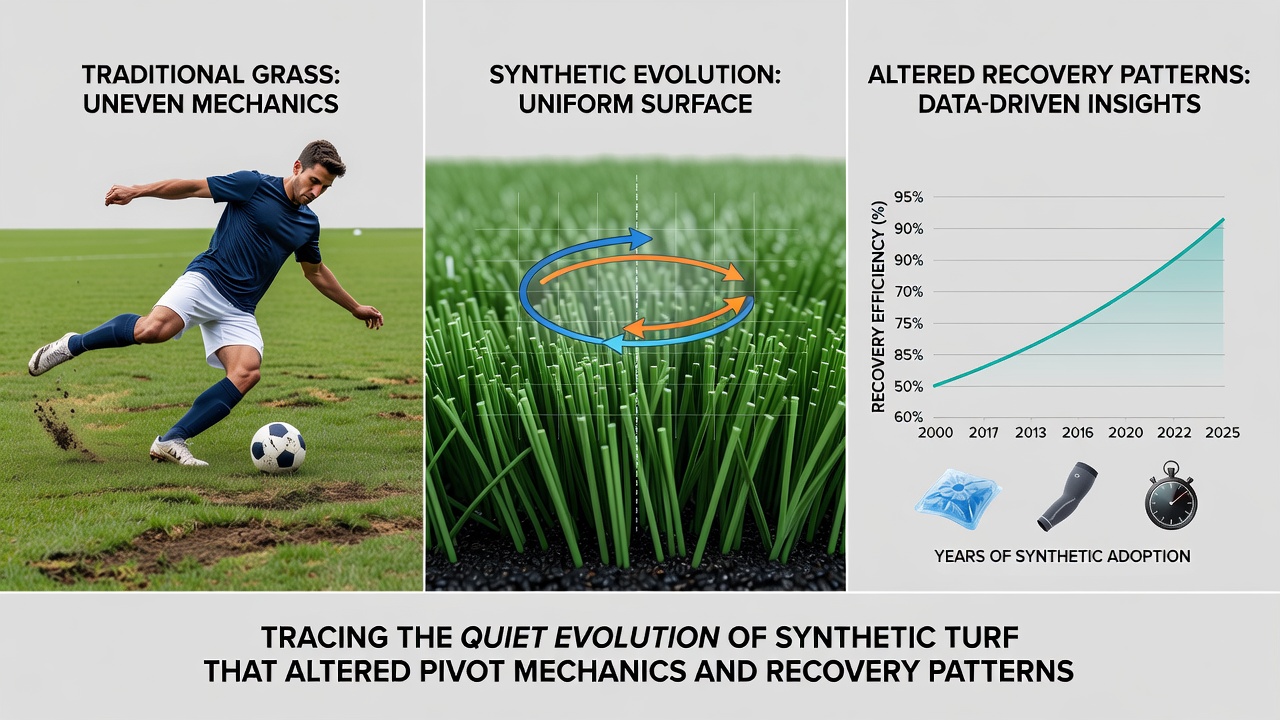
Studies from Canadian sports science centers tracked how these surfaces affected deceleration forces during cutting movements, revealing that linebackers experienced altered loading on knee joints when planting on third-generation turf compared with earlier iterations. Recovery patterns improved for some athletes once cooling and drainage features became standard, enabling more consistent return-to-play schedules across congested match calendars. Data compiled through the early 2000s demonstrated gradual reductions in certain non-contact lower-extremity incidents as turf formulations evolved to include better cushioning layers.
Contemporary Standards and Biomechanical Insights
Into the 2010s and 2020s, fourth-generation systems introduced longer fibers and organic infills that further lowered peak torque during pivots, and longitudinal tracking by European research networks showed field hockey defenders adapting their stance widths to optimize balance on these surfaces. Soccer midfielders recorded higher work rates in matches played on certified pitches, with GPS data indicating smoother acceleration profiles after directional changes. American football linebackers saw benefits in practice settings where consistent footing allowed repeated high-intensity drills without the variability of weather-affected grass.
By June 2026, updated guidelines from international federations continue to emphasize rotational friction thresholds that directly relate to the movement patterns of these specific positions, and facilities worldwide have integrated real-time monitoring sensors to capture how athletes load their joints during games. Observers note that recovery protocols now incorporate surface-specific metrics, helping medical staff tailor rehabilitation for players returning from lower-body issues sustained on synthetic fields. Academic papers from institutions across multiple continents have quantified how these incremental material improvements have contributed to extended training consistency for defenders, linebackers, and midfielders alike.
Conclusion
The progression of synthetic turf since the 1970s has produced measurable shifts in how athletes in field hockey, American football, and soccer execute pivots while also influencing documented recovery intervals. Ongoing refinements in fiber composition, infill composition, and testing standards maintain relevance for positional demands that center on rapid directional changes and sustained movement volume. Continued data collection from professional and collegiate levels supports further understanding of these surface-athlete interactions across evolving playing environments.